
Last updated November 15, 2026
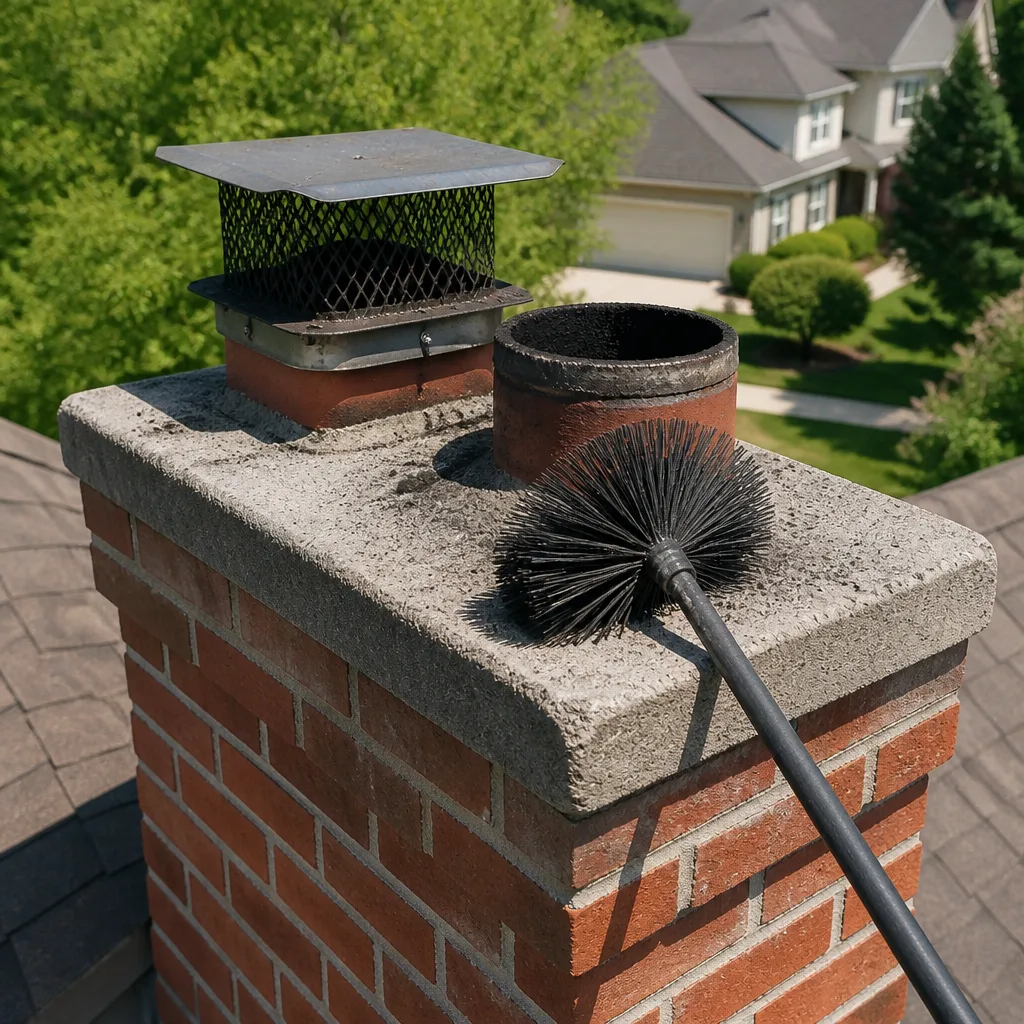 Sweep & inspection
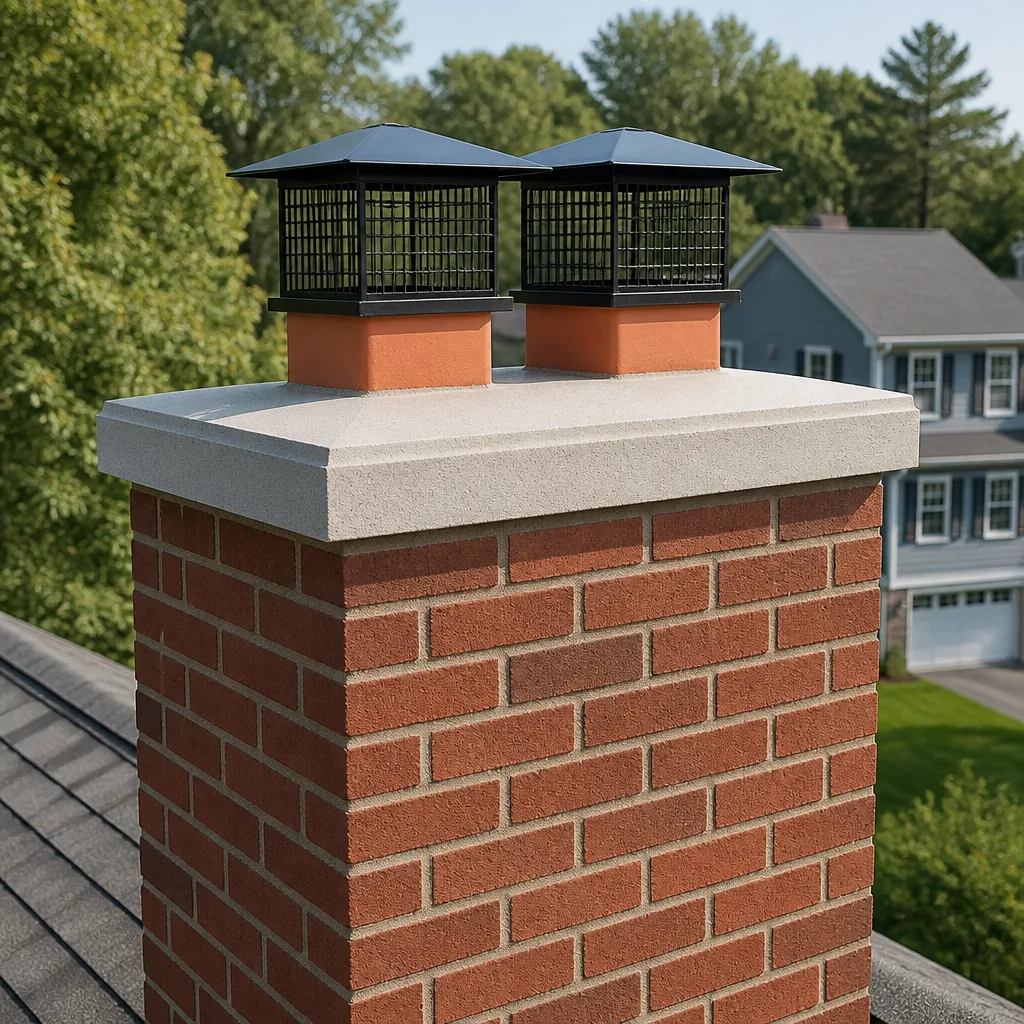 Caps & crowns
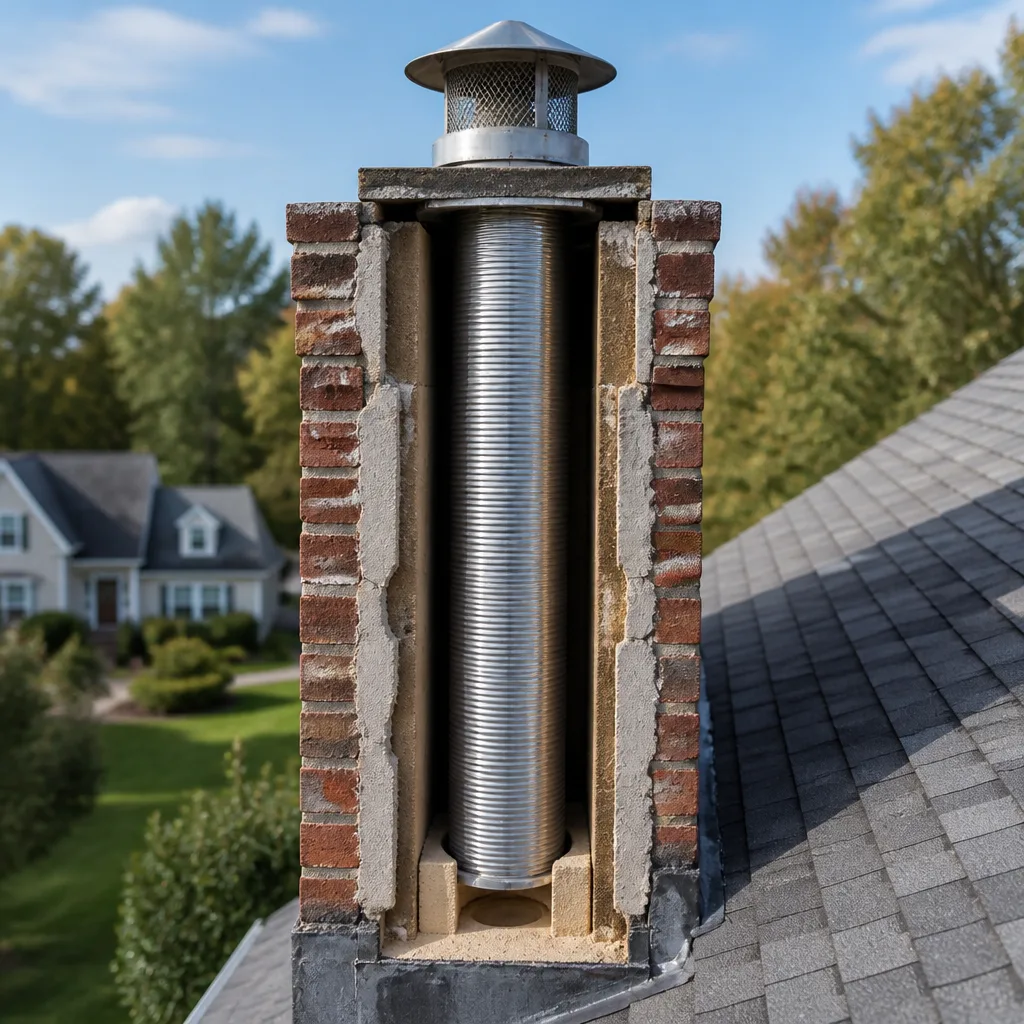 Flue relining
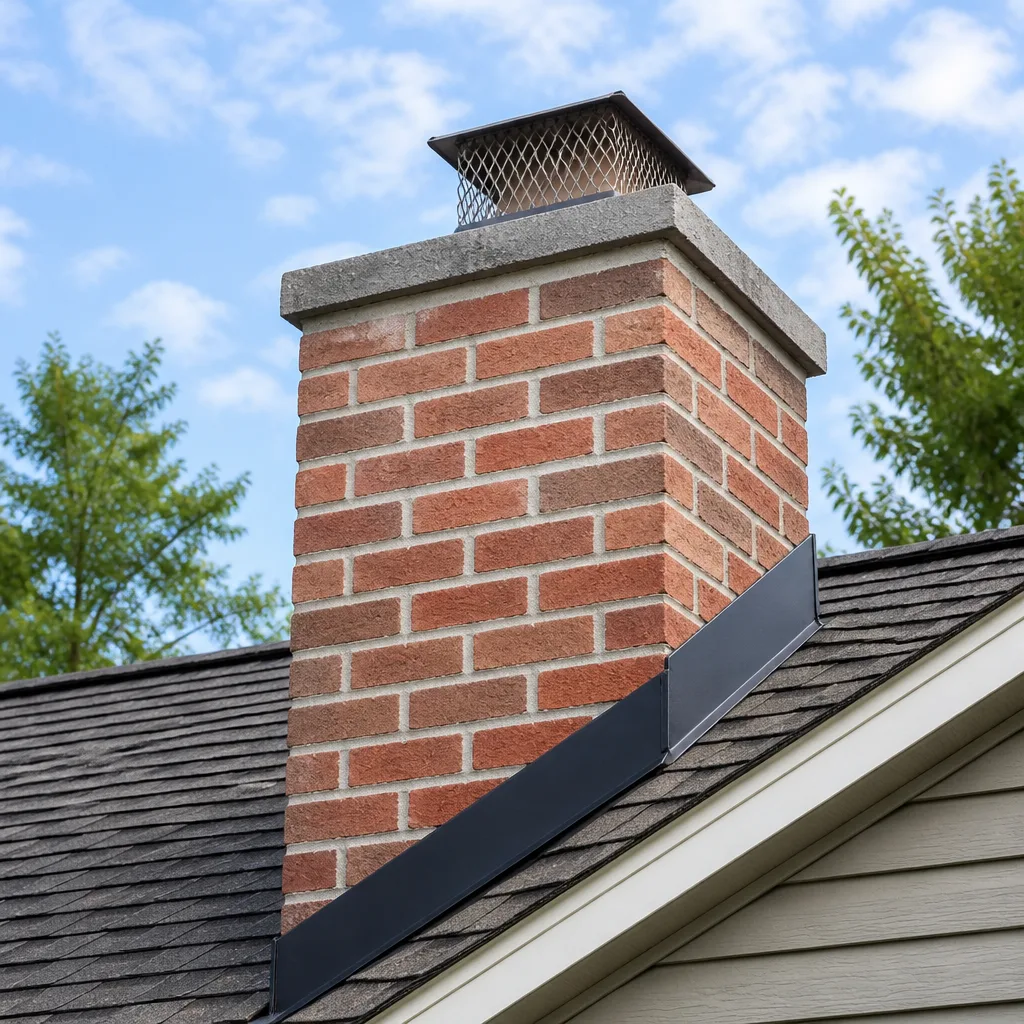 Masonry repair
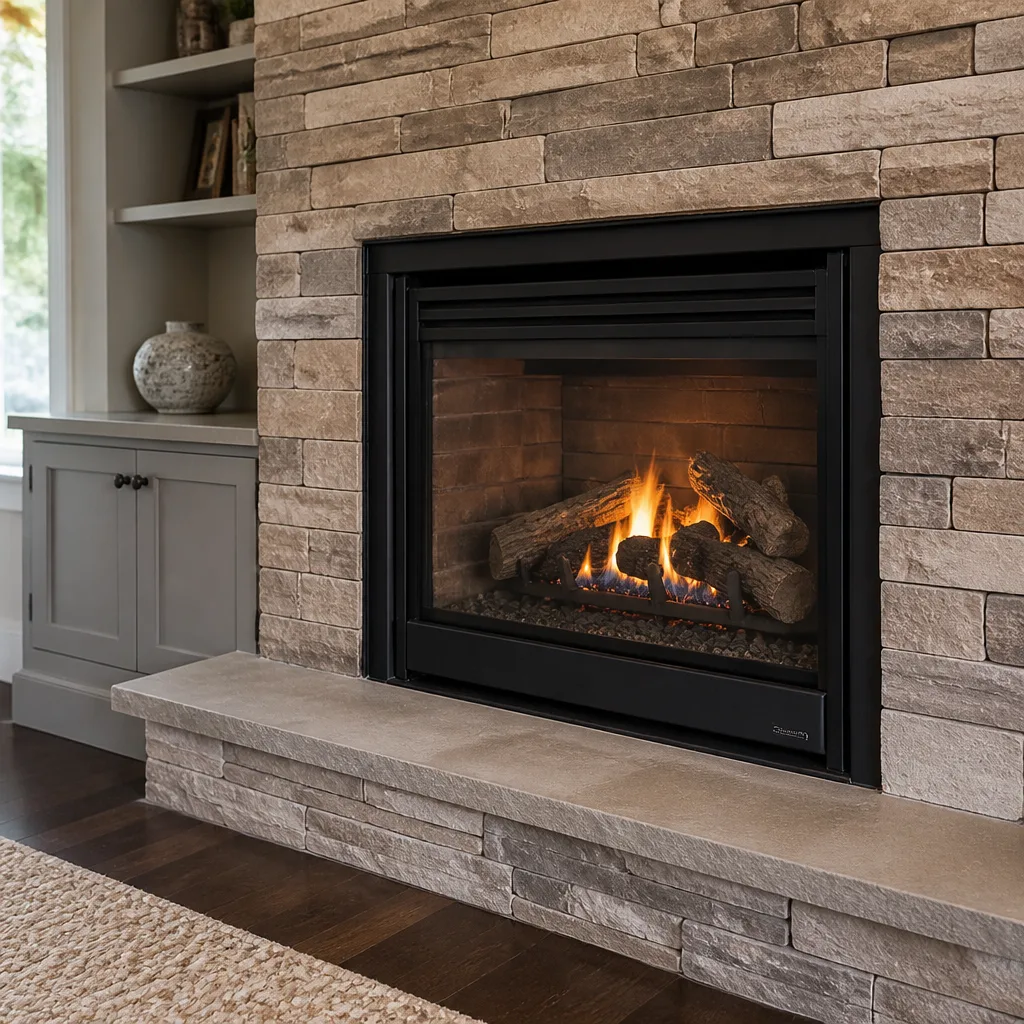 Gas fireplace service
Level 1 sweep and inspection to the NFPA 211 annual standard - flue, crown, cap, and flashing checked and photographed
Chimney sweep logs do not sweep chimneys. They loosen some creosote - which then falls where a brush and vacuum still have to collect it.
Choosing the Right Chimney Cleaning Brand: A Buyer’s Guide for Palm Bay
Most homeowners searching for chimney help in Palm Bay think the decision starts and ends with a company name on a truck. It doesn’t. The decision that actually determines how long your repair lasts, and whether your liner holds up through Florida’s wet season, is which product lines the contractor puts inside your chimney. Two companies can quote the same price for a chimney cap; one installs a stainless unit built for humid air, the other bolts on a generic galvanized cap from a box store. Eighteen months of sun and rain later, the difference shows up as rust streaks down your chase. This guide walks through how to judge both the contractor and the materials, what to ask before you book, and how to confirm a finished job matches what was specified.
Quick Answer
Choosing the right chimney cleaning brand in Palm Bay means choosing a contractor who can show you which professional-grade product lines they install, can sweep, inspect, and repair with the same team, and will document findings with photos before recommending anything. Ask what brands they use for liners, caps, and firebox restoration, then ask to see the manufacturer spec sheet for what goes in your chimney. If a contractor can’t answer either question clearly, keep looking.
For a full look at our core service, start with chimney sweep.
Styles & brands we work with
- Sweep & inspection
- Caps & crowns
- Flue relining
- Masonry repair
- Gas fireplace service
Table of Contents
- Why the “brand” decision is really about materials
- The product lines certified contractors actually use
- How Palm Bay’s humidity and storm season degrade cheap parts
- Franchise versus independent certified specialist
- Questions to ask before you book a sweep
- How to verify installed parts match manufacturer specs
- Why spec-matched parts matter for warranty and resale
Why the “brand” decision is really about materials
When people search for a chimney cleaning company in Palm Bay, they’re usually trying to choose between company names. The more useful question is what those companies put into your chimney. Chimney components are not commodity parts. A flexible liner is a specific alloy at a specific wall thickness, rated for a specific fuel type. A cap is a specific gauge of steel with a specific coating. When a contractor installs a cap or a liner without telling you the brand and the specification, you have no way to know whether the part meets the manufacturer’s rating for your appliance, and no paper trail if it fails.
Here’s how to think about it. There are two kinds of chimney contractors operating in Brevard County:
- Specification-driven contractors buy from professional-grade suppliers and can tell you the exact brand, part number, and rating for what goes in your chimney. They keep the spec sheets and hand them over.
- Convenience-driven contractors buy whatever the local supply house has on the shelf that week, which is often generic galvanized or low-grade cast components with no clear rating for the appliance in your home.
Both may sweep your flue competently. The difference shows up years later, when the cap rusts through or the firebox mortar fails and nobody can tell you whether the part was rated for the job. A specification-driven contractor gives you a paper trail. That paper trail is the single most useful thing you can get from a chimney company.
We’ll use our own toolkit as the example throughout this guide, not because we’re the only contractor in Palm Bay, but because it’s concrete. We work with DuraFlex flexible liner systems, HeatShield for firebox and flue tile restoration, and Gelco and Copperfield components for caps and the surrounding assembly. Each of those names corresponds to a specific product family with published ratings. Whenever a contractor in this trade tells you they use “professional-grade materials,” the follow-up question is always: which brands, and can I see the spec sheet?
The product lines certified contractors actually use
The reason brand names matter is simple: professional-grade chimney products come with published specifications, and generic parts often don’t. Here’s what each category of product does, and what to look for when a contractor names a brand.
Liners
A chimney liner is the flue surface that actually contains the smoke and heat. Stainless flexible liners are the standard solution when a clay tile flue is cracked, unlined, or sized wrong for the appliance. DuraFlex flexible liner systems are one of the product lines certified contractors use for relining jobs in Palm Bay, and the reason is spec transparency. Every DuraFlex liner carries an alloy designation and a wall thickness, and the manufacturer publishes the ratings for fuel type, temperature, and appliance category. A generic liner from a box store usually doesn’t come with that documentation.
Ask the contractor directly: what alloy is the liner, what wall thickness, and what is it rated for? If the answer is “stainless,” that’s not an answer. Stainless covers a wide range of alloys with very different performance characteristics, and the correct alloy for a wood-burning fireplace is not the correct alloy for a gas insert or an oil appliance.
Firebox and flue tile restoration
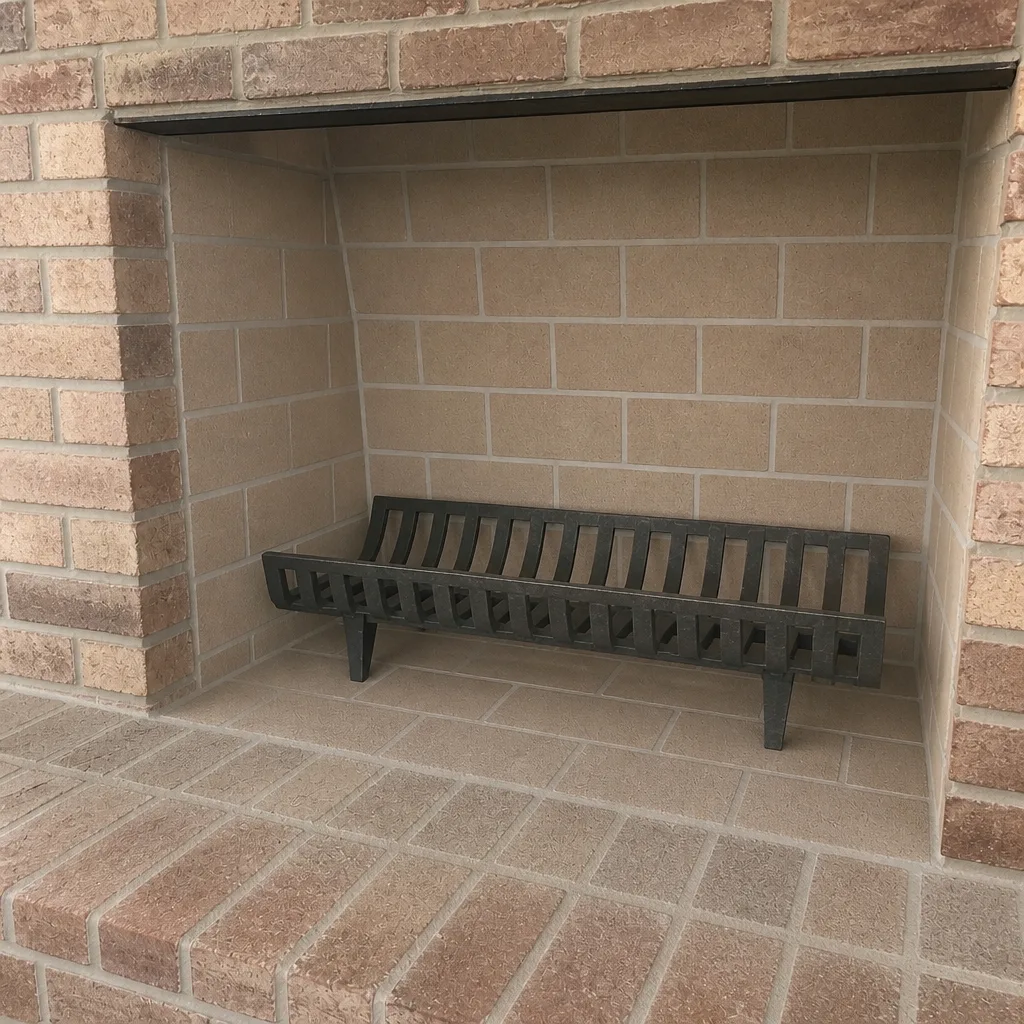
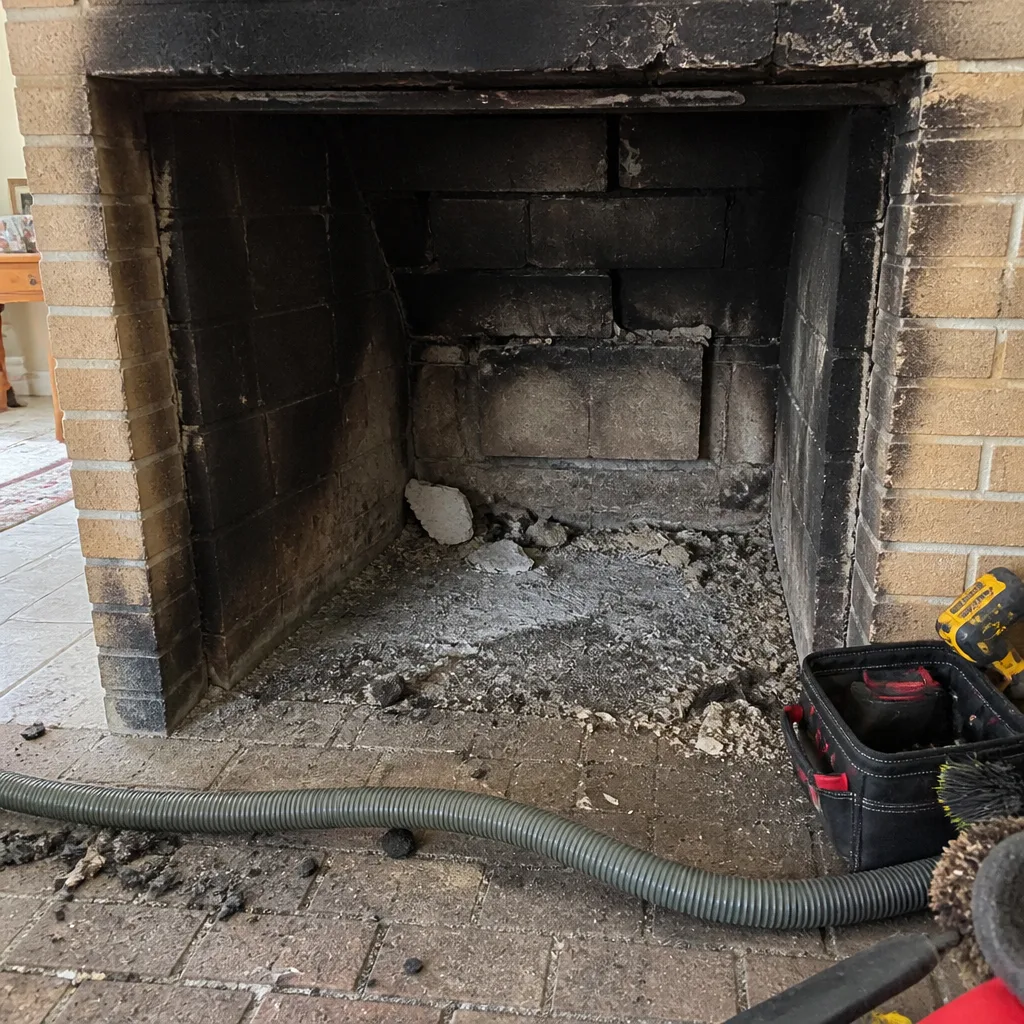
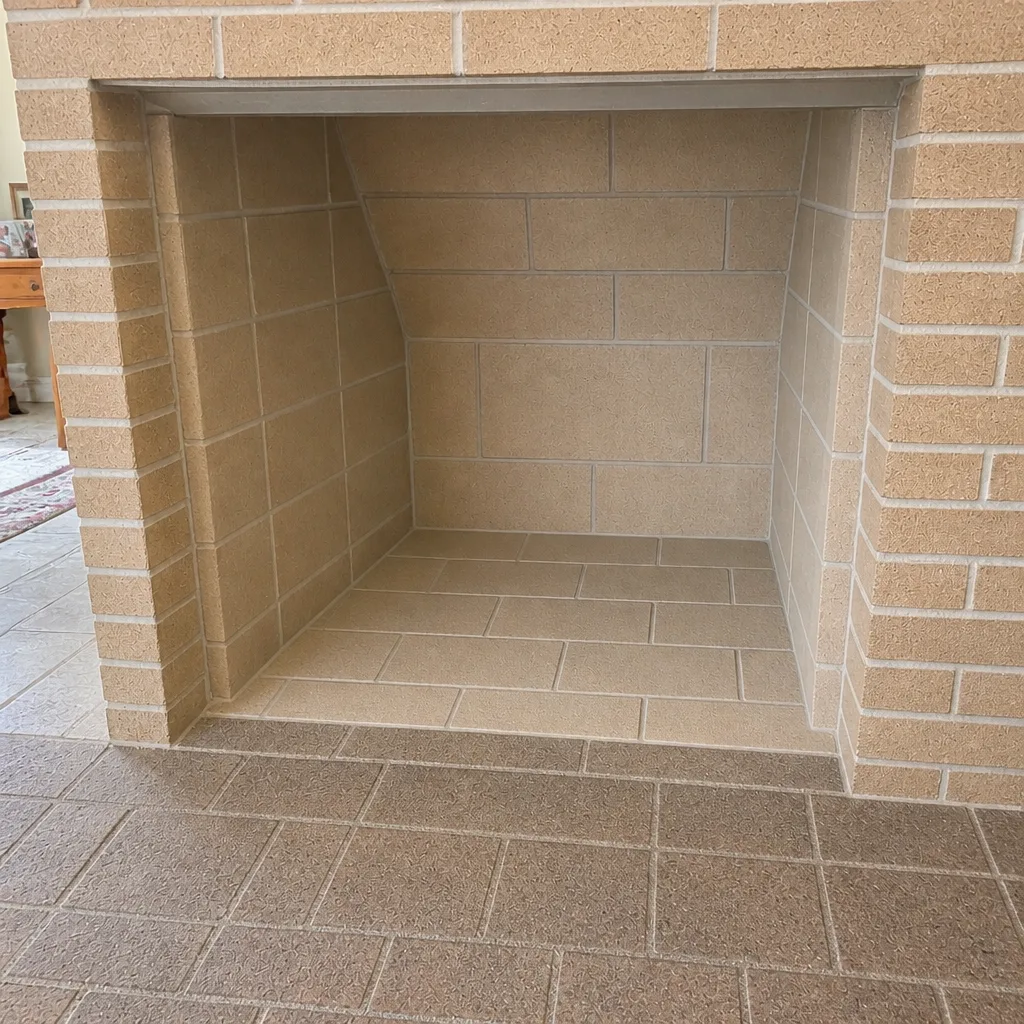
When the firebox mortar or the flue tiles are cracked but still structurally sound, a repair that resurfaces the masonry can extend its life without a rebuild. HeatShield is the specialist-grade ceramic resurfacing system used for that job. It’s a product most generalist handymen don’t stock, don’t know how to apply, and won’t quote. When a contractor tells you they can apply HeatShield to a firebox, that’s a useful signal. It means they’ve been trained on the product and they can scope firebox restoration as a repair rather than always recommending a rebuild.
Caps, dampers, and the surrounding assembly
A chimney cap is small but does a lot: it keeps rain, animals, and debris out of the flue, and it screens sparks. Generic galvanized caps are cheap and common. Professional-grade stainless and copper caps are more expensive and last far longer in a humid climate. Gelco manufactures caps, dampers, and venting components used by contractors. Copperfield makes stainless caps and top-sealing dampers with published specifications. When you’re evaluating a quote, the difference between a generic cap and a spec’d cap is usually a few dollars at installation and years of life.
If you’re considering a cap replacement or a top-sealing damper alongside a sweep, we’d handle it as part of the same visit rather than scheduling a second company. More on that under chimney repair.
How Palm Bay’s humidity and storm season degrade cheap parts
Parts that last a decade in a dry climate can fail in a fraction of that time in Palm Bay. The reason isn’t dramatic; it’s the steady work of heat, humidity, and storm-season rain exposure on materials that weren’t built for it.
What actually happens to low-grade chimney components here:
- Galvanized caps rust from the inside out. The zinc coating on a galvanized cap protects the steel below until it doesn’t. In sustained humidity, with wet-dry cycling from summer thunderstorms, that coating breaks down much faster than a manufacturer’s dry-climate test data suggests. Once it goes, the steel underneath rusts through in a season or two.
- Cheap cast-iron dampers seize. Moisture and heat cycling work carbon and rust into the damper pivot. A damper that doesn’t open smoothly is a damper that’s been forced and abraded. Stainless and sealed dampers resist this; cheap cast ones do not.
- Low-grade mortar and sealants erode. Applied in humid conditions and then exposed to heat cycling from the flue, cheap mortar cracks and pulls away from the firebox joints. This is the entry point for a much bigger repair.
- Rust stains on the chase and roof. A rusting galvanized cap leaves streaks down the side of the chimney chase and stains the roof flashing. By the time the homeowner notices, the cap is failing.
This is the practical argument for professional-grade components. Not that cheap parts fall off in the first month, but that the quality gap widens every summer they stay on the chimney. In our experience, the difference between a properly spec’d stainless cap and a generic galvanized cap is usually visible within the first 18 months of summer exposure here.
Franchise versus independent certified specialist
Both franchise chimney services and independent specialists operate in Palm Bay, and both have a legitimate place. The choice comes down to what you need. Here’s the honest comparison.
Franchise chimney services
- Pros: Standardized process. Consistent customer experience. A recognizable brand on the truck. Typically a defined scope of services.
- Cons: Product sourcing can vary from location to location, because franchisees often source parts independently. The brand consistency you’re paying for applies to the process, not necessarily to what goes in your chimney.
- Second-company risk: Many franchises perform the sweep and inspection but refer repair work to a partner company. That means a two-company job with a gap between what the inspector found and what the repair crew assumed.
Independent certified specialists
- Pros: Known product sourcing, because the same team that quotes is the team that installs. Custom scope, because the contractor can tailor the repair to the specific firebox, liner, and fuel type. Single-point accountability, because there’s no handoff between inspection and repair.
- Cons: Less standardized process from contractor to contractor. You have to do more homework on which one to hire. The burden of verification shifts to you.
- Full-service benefit: A specialist who sweeps, inspects, and repairs can escalate a finding into a repair without a second appointment or a second company.
The practical rule we’d give a homeowner in Palm Bay: if you want the sweep and the inspection to be the end of the job, a franchise works. If you want the same team that found the problem to fix it, with a documented trail from spec sheet to finished part, an independent specialist who can name their product lines is the better fit.
For a comparison of both approaches when you need the initial sweep, see the main Chimney Sweep Palm Bay page.
Questions to ask before you book a sweep
You don’t need technical knowledge to vet a chimney contractor. You need a small set of pointed questions that separate a specification-driven contractor from a convenience-driven one. Ask these on the phone before you book.
- Do you sweep, inspect, and repair, or just sweep? If they only sweep, ask who they refer repairs to. If the answer is “another company,” you’re going to have a two-company job for anything beyond basic cleaning.
- What brands do you use for liners? You’re looking for a specific name, ideally one with published ratings. If the answer is “we use whatever fits,” that’s a red flag.
- Can you tell me the specification of the liner you’d recommend for my setup? A trained contractor can. An untrained one will deflect.
- Do you document the inspection with photos? This is the single most important question. Photos are what let you verify the recommendation before you say yes.
- Can you apply HeatShield for firebox restoration? If the firebox mortar is failing, this is the alternative to a rebuild. If the contractor doesn’t stock or know the product, they won’t offer it.
- What’s the spec sheet for the cap you’d install? For a cap replacement job, this tells you whether you’re getting stainless and how it’s rated.
- Will the same team that inspects also do the repair? The answer should be yes for anything beyond basic sweeping.
Any competent contractor should be able to answer all seven without hesitating. If they can’t, that’s information you didn’t have to pay a service call to learn. Call (855) 632-3563 if you’d like to walk through these questions with us before booking.
How to verify installed parts match manufacturer specs
Even after a contractor tells you what they’ll install, the finished job should leave you with proof that the actual installed component matches the specification. This is where a written record matters, and it’s where most homeowners leave money on the table.
A properly documented chimney job leaves you with a small paper trail:
- The written estimate, naming the brand and model of each component to be installed.
- The inspection report, with photos of the flue before and after cleaning, and close-ups of any cracks, gaps, or deterioration.
- The spec sheet or product literature for the liner, cap, or resurfacing system, showing the rating for your specific appliance type.
- A photo of the installed component in place, showing the brand marking or the specification plate if there is one.
Why does this matter? Because when you go to sell a Palm Bay home with a fireplace, or when you have a claim and your insurer asks what was installed, or when a future chimney inspector looks at the flue and wants to know what’s in it, you’ll have the answer. A generic part with no paperwork leaves you with nothing to show. A spec-matched part with a paper trail tells the next inspector, the next insurer, and the next buyer exactly what’s in the chimney.
If a contractor balks at providing the spec sheet or the installation photo, that’s the clearest possible signal that the part they installed wasn’t spec’d to begin with. Any contractor who works with DuraFlex, HeatShield, Gelco, or Copperfield should be able to hand over the documentation without a problem.
Why spec-matched parts matter for warranty and resale
Manufacturer warranties on chimney components are conditional on proper installation and, in most cases, on the part being installed by a trained professional in the manufacturer’s specified manner. That means two things for a Palm Bay homeowner.
First, if the liner or the cap fails within its warranty window and no spec sheet or installation record exists, the warranty claim may not go through, regardless of whether the installer did the work correctly. The paperwork is the warranty. Without it, you’re relying on the contractor’s own warranty, which may or may not be documented.
Second, at resale, a chimney with documented professional repairs is a stronger position than a chimney with unknown work and no records. A buyer’s inspector will flag a fireplace with no documentation as “unknown,” and “unknown” often translates into a repair credit negotiated at closing. A fireplace with a clean inspection report, a specification sheet for the liner or cap that was installed, and a photo of the finished job reads very differently in a transaction: it reads as an asset rather than a liability.
This is a Palm Bay-specific point as much as a general one. Buyers here know what a chimney goes through in the local climate, and they know what a rusted cap or a cracked firebox looks like. A documented, spec-matched job is worth more at the negotiating table than the few dollars saved on a generic part.
Common Mistakes to Avoid
- Hiring based on price alone. The cheapest quote is often the one using generic parts with no spec sheets. Ask about the parts, not just the labor.
- Skipping the inspection to save time. A sweep without an inspection is half the job. You’ll know the flue is clean but nothing about whether it’s structurally sound. The inspection is what catches problems while they’re small.
- Accepting “reline” without a photo of the problem. If a contractor tells you the liner needs replacing, ask to see the crack, the missing tile, or the specific defect before agreeing. A trained contractor will show you. A confident upseller will not.
- Assuming a franchise brand guarantees product quality. Franchise process and franchise parts are two different things. Ask what the local location sources, not what the national brand recommends.
- Letting one company inspect and another repair. When the inspector and the repair team are different companies, findings get lost in the handoff. A two-company chimney job in Palm Bay is a common cause of unclear specs at the end.
- Not keeping the paperwork. The spec sheet, the inspection photos, and the written estimate are the paper trail a future buyer or insurer will ask for. Put them in a folder with your home records.
- Skipping the sweep because the fireplace “doesn’t get used much.” Creosote and debris accumulate slowly, and structural issues like cracked tiles or failing mortar develop whether or not the fireplace is lit. A chimney that hasn’t been inspected in over a year is due for one regardless of use.
See the difference
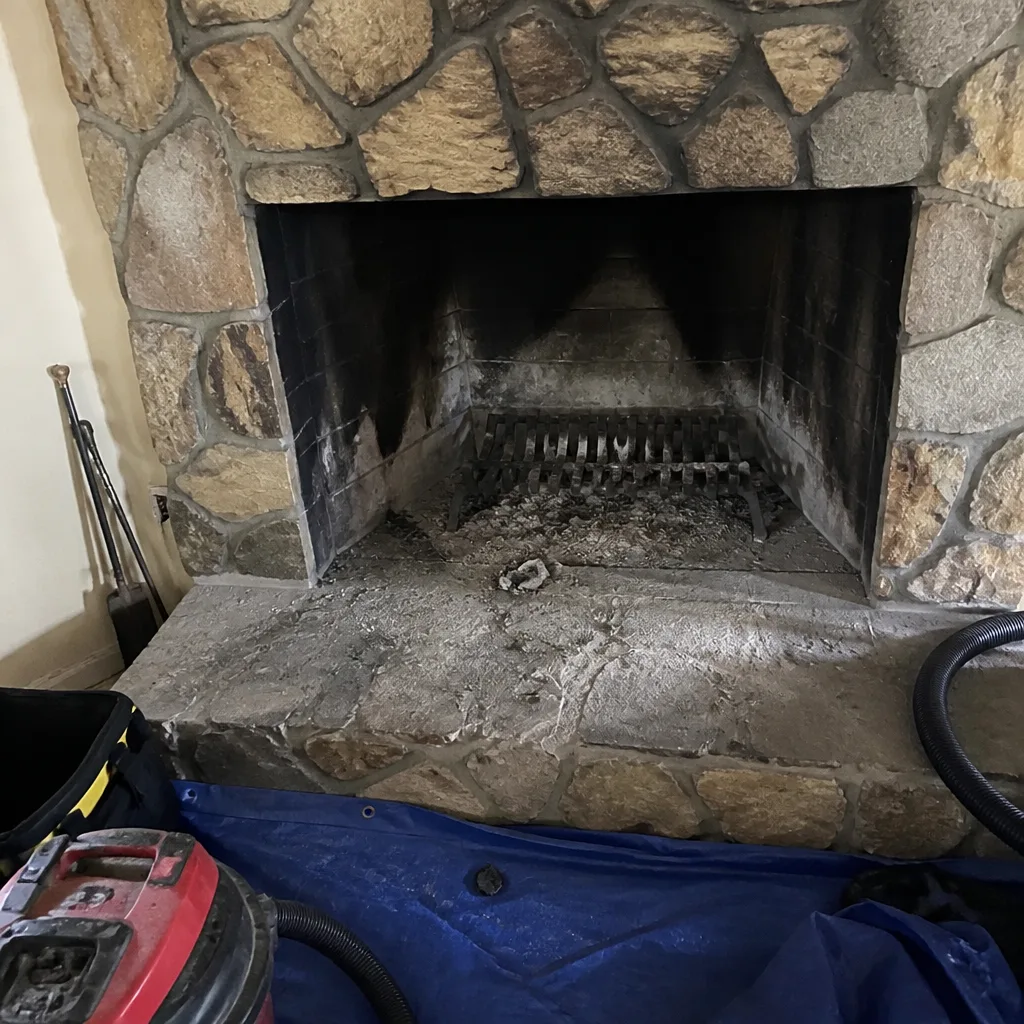 Before
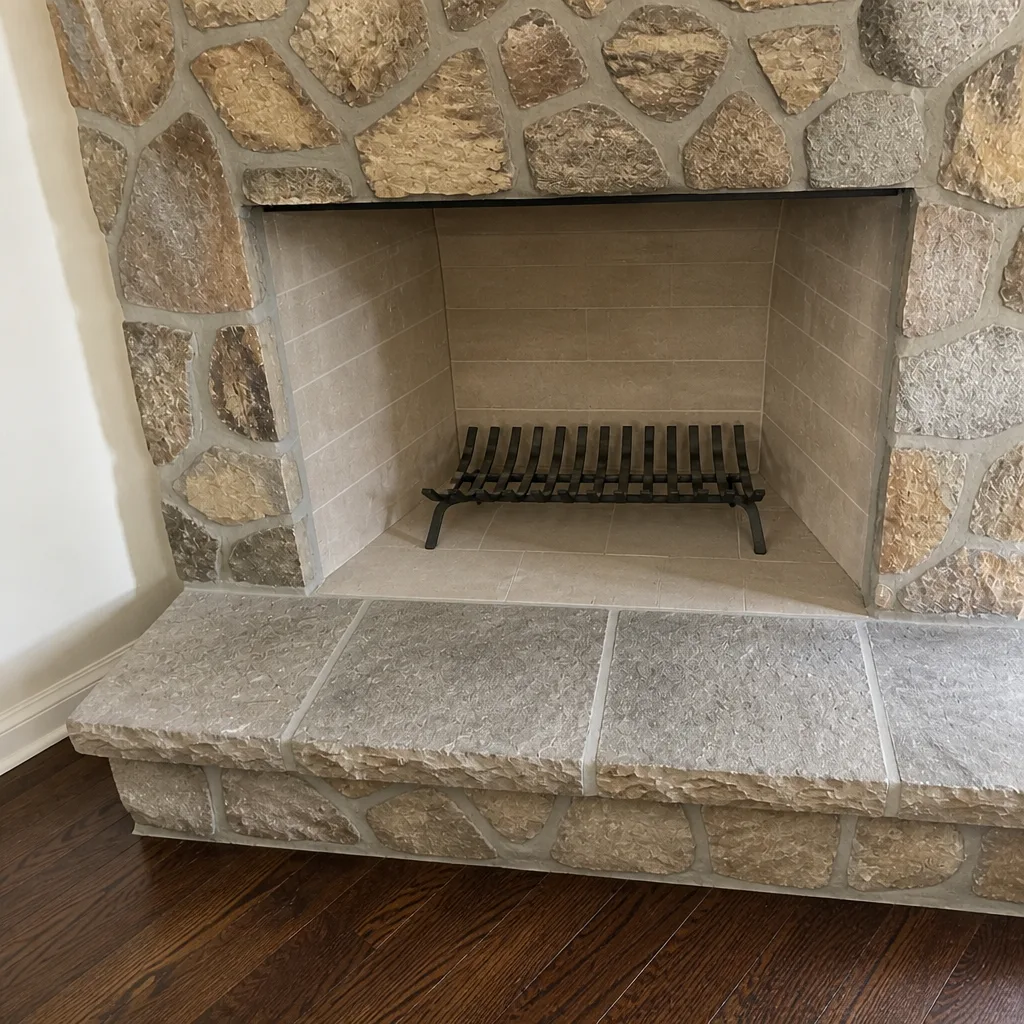 After
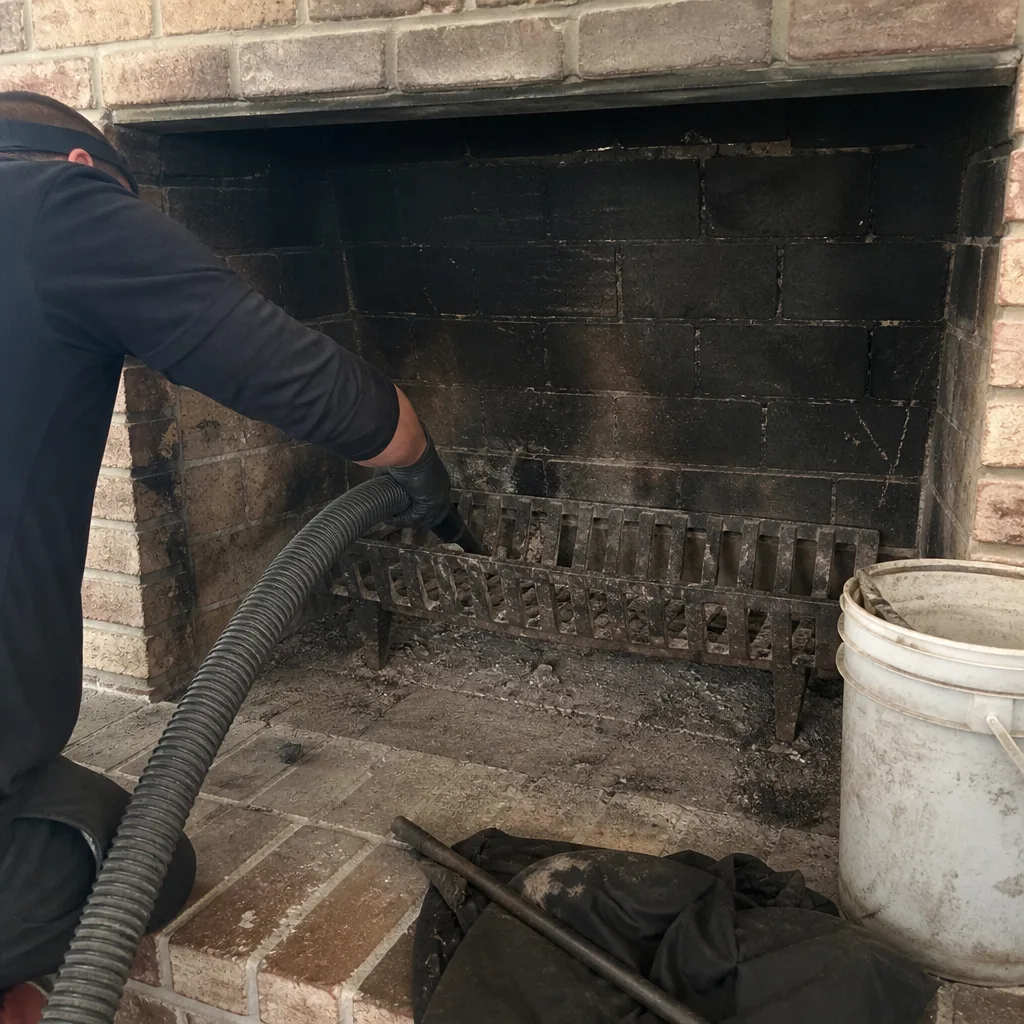 Before
 After
 Before
 After
When to Call a Professional
Some chimney issues can wait for a scheduled visit. Others shouldn’t. Call a professional immediately if you notice smoke backing into the room when the fireplace is lit, a persistent odor in the house when the fireplace is not in use, visible cracks in the firebox or flue tile, crumbling mortar between firebox bricks, or a cap that’s loose, missing, or visibly rusting through. Call before you light the fireplace for the first time this season if you haven’t had an inspection in over a year, and call after a storm if you see or suspect damage to the chimney top. If you’re buying a home in Palm Bay with a fireplace and have no documentation of past work, schedule an inspection before closing.
Chimney Sweep Palm Bay offers free estimates in Palm Bay. Call (855) 632-3563. We answer 24/7. Fast dispatch from 7am to 7pm, Sunday through Friday.
Frequently Asked Questions
Most wood-burning fireplaces should be swept once a year, and inspections should happen at the same time. If you burn wood frequently, or if you notice a buildup of creosote on the flue walls, sweep more often. Call (855) 632-3563 for an honest evaluation of what your specific fireplace needs – estimates are free.
Sweeping and inspection are typically bundled as a single visit, and the price is set per job by the written estimate. Cost depends on the fuel type, the flue size, and the condition of the chimney. We don’t charge for the estimate. Call (855) 632-3563 and we’ll walk you through what a fair quote looks like for your setup.
Only if the inspection shows a defect that the existing liner can’t safely contain. Cracks, gaps between tiles, missing sections, or a liner that isn’t sized for the appliance are the usual reasons a liner needs replacement. We won’t recommend one without a photo of the problem you can see for yourself. Call (855) 632-3563 if you want a second opinion on a liner recommendation.
Creosote and debris build up inside the flue over time. Skip the sweep for a season or two and the buildup thickens, which increases the risk of a flue fire and reduces how well the chimney drafts. Structural issues like cracked tiles or failing mortar also go unnoticed without the inspection. Call (855) 632-3563 to schedule a sweep and get ahead of it – estimates are free.
Ask three questions: which brands they install, what specification they’d use for your fuel type, and whether they’ll provide the spec sheet when the job is done. A contractor who works with brands like DuraFlex, HeatShield, Gelco, or Copperfield can answer all three directly. A contractor using generic parts will usually deflect. Call (855) 632-3563 if you want to talk through the brands we work with and why.
Often, yes. Sweeping and inspection happen in the same visit, and if the inspection uncovers a minor repair the same team can usually handle it without a second appointment. Larger jobs, like a full liner replacement, are scheduled as their own visit after the inspection report and estimate are in your hands. Call (855) 632-3563 to talk through your specific situation.
The Bottom Line
Choosing the right chimney cleaning company in Palm Bay comes down to choosing the right parts and the right accountability. Look for a contractor who can name their product lines, explain the specification for what goes in your chimney, hand over a spec sheet and installation photo when the job is done, and handle sweep, inspection, and repair with the same team. Expect professional-grade brands like DuraFlex, HeatShield, Gelco, and Copperfield, not unmarked parts from the nearest supply house. In a climate that works on chimney components year-round, that difference is what keeps your fireplace safe to light and your paperwork clean if you ever sell.
Ready to book a sweep, or want a free estimate before you decide? Call (855) 632-3563. We answer 24/7. Fast dispatch from 7am to 7pm, Sunday through Friday. Service across Palm Bay and the surrounding area.
Written by the team at Chimney Sweep Palm Bay.