
Last updated November 15, 2026
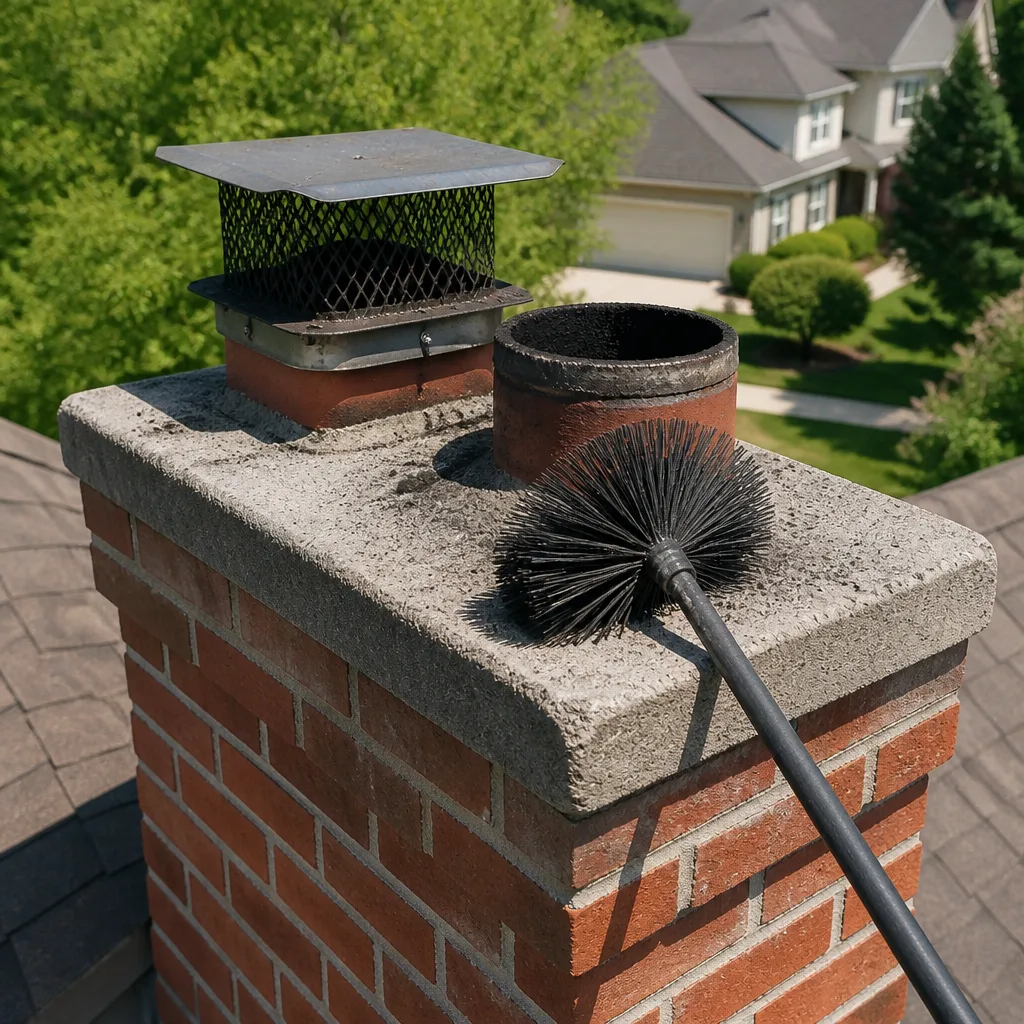 Sweep & inspection
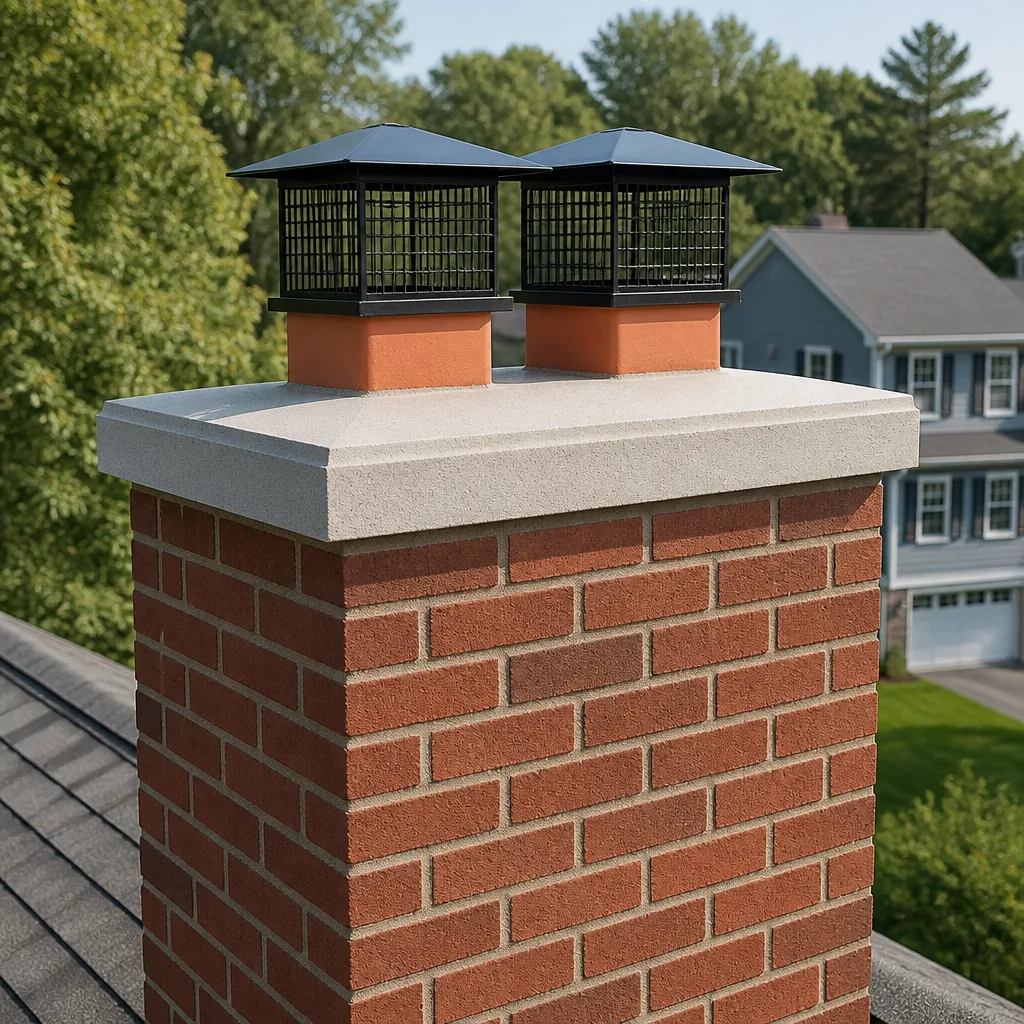 Caps & crowns
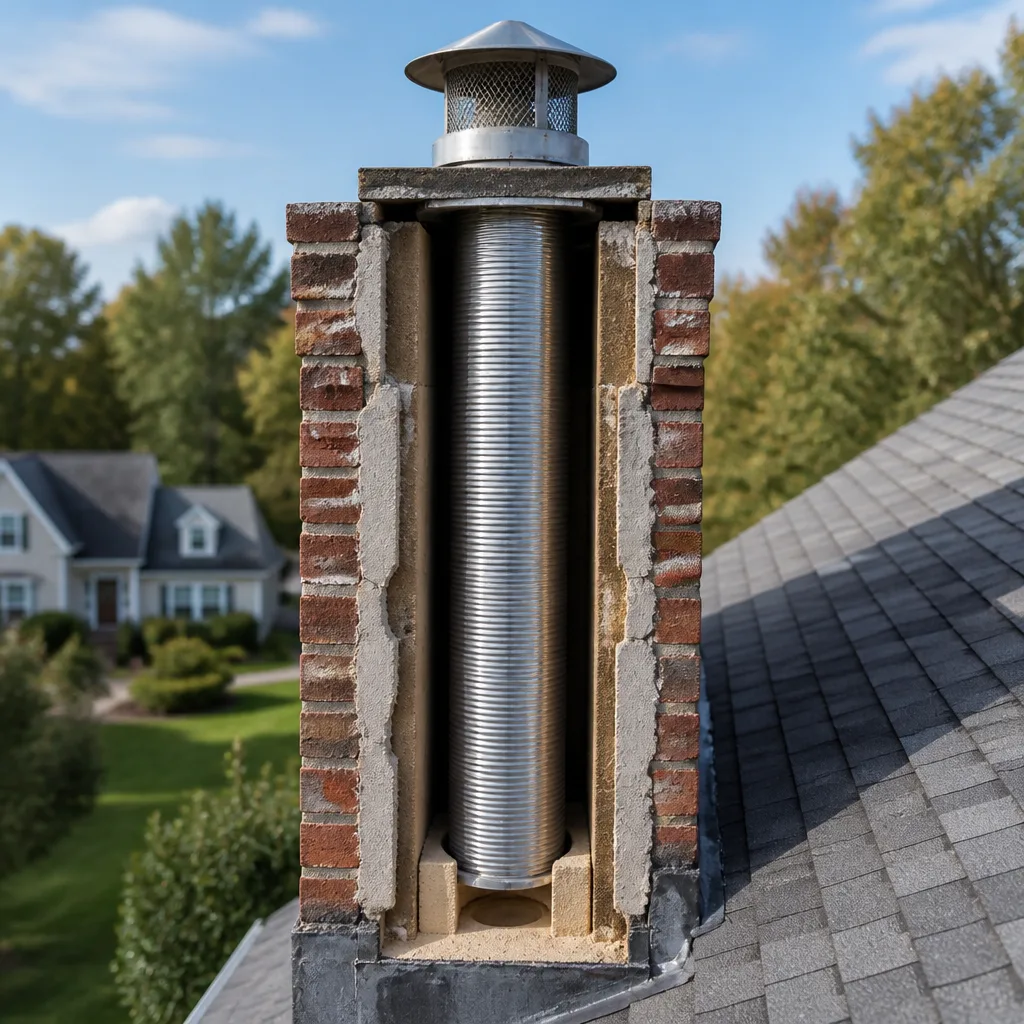 Flue relining
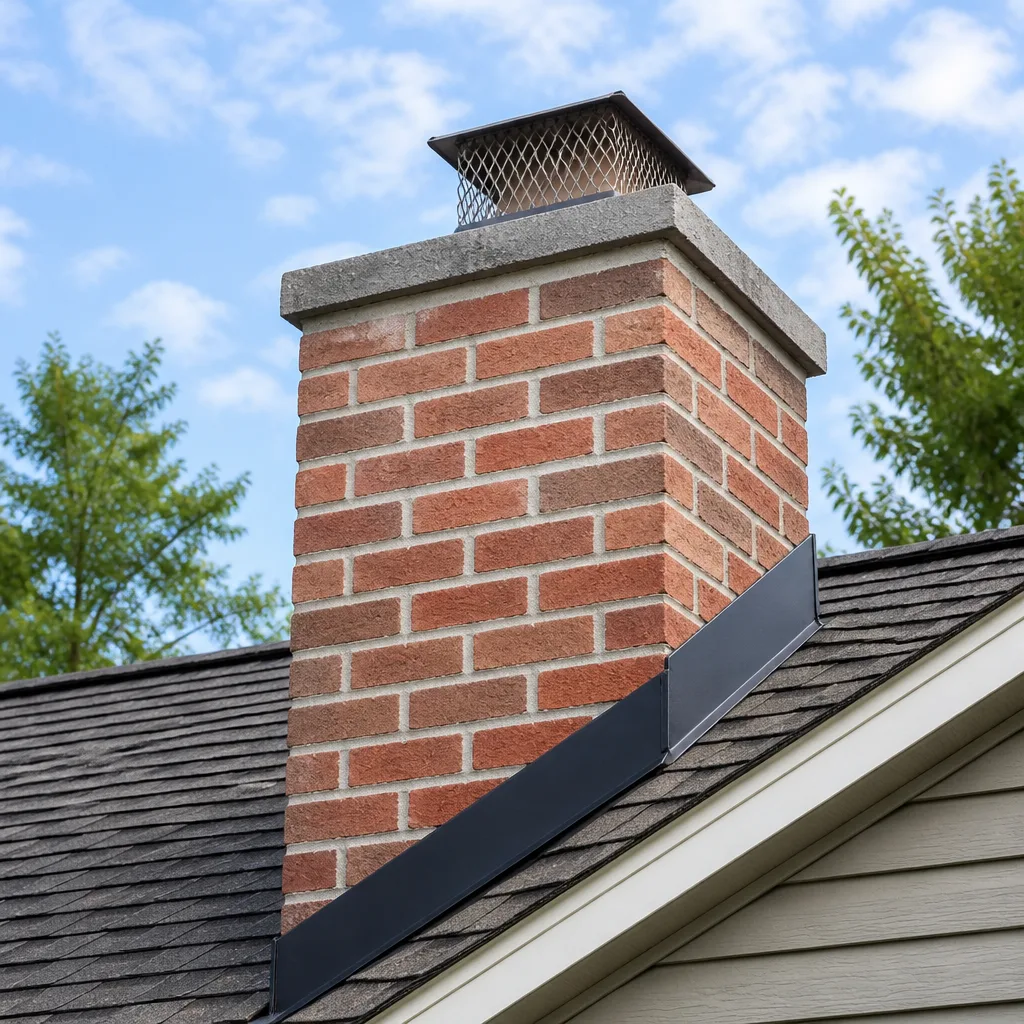 Masonry repair
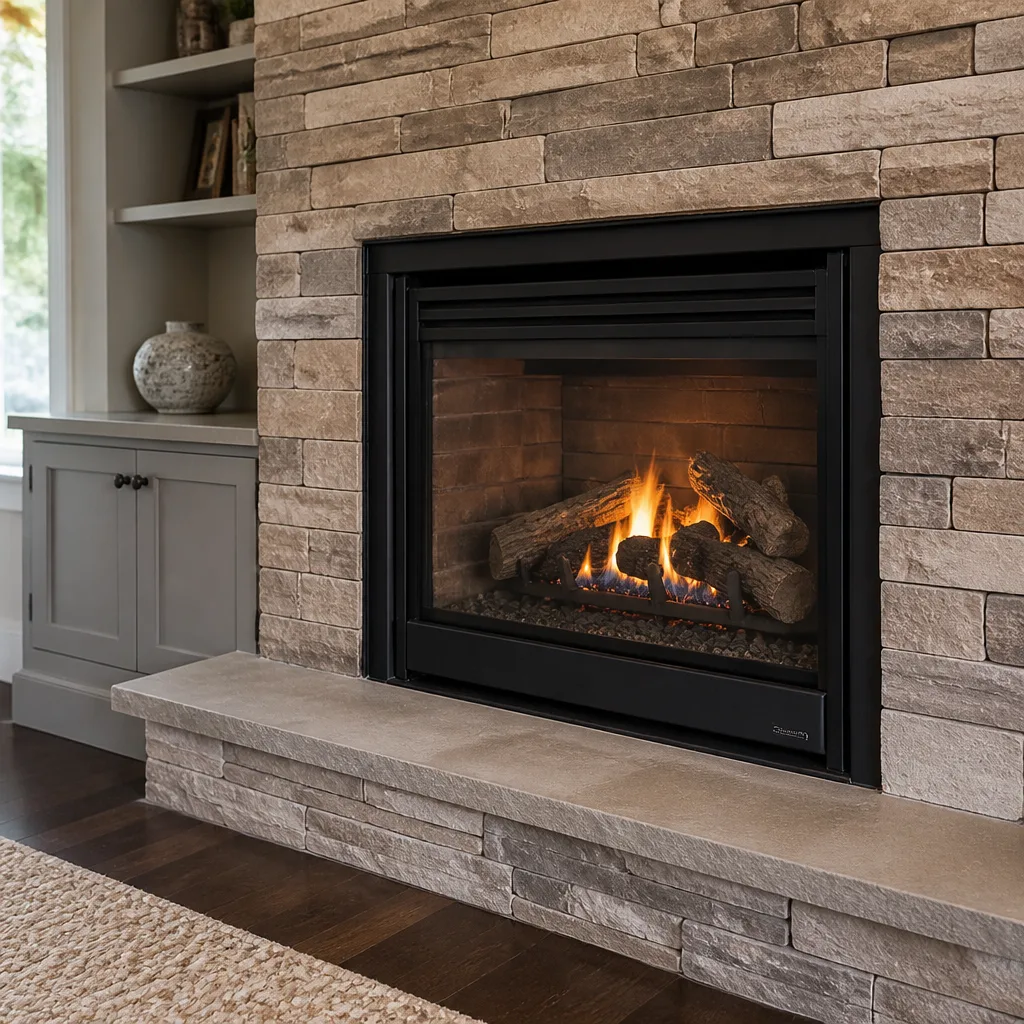 Gas fireplace service
Level 1 sweep and inspection to the NFPA 211 annual standard - flue, crown, cap, and flashing checked and photographed
Chimney sweep logs do not sweep chimneys. They loosen some creosote - which then falls where a brush and vacuum still have to collect it.
Chimney Sweep Troubleshooting in Palm Bay: Common Problems and How to Fix Them
Smoke curling out of the fireplace and into the room is the moment most people pick up the phone. The instinct is to blame a dirty flue. In Palm Bay‘s humid climate, though, a warped damper plate or a critter-blocked cap causes that symptom more often than creosote does. That gap between what a homeowner assumes and what’s actually wrong is where most chimney money gets wasted.
This guide works through chimney troubleshooting the way a sweep does it on site: symptom first, likely cause second, then the fix. You’ll learn how Palm Bay‘s damp air wears on mortar and how that masquerades as a creosote problem, how to read smoke, odor and staining as clues, which jobs you can safely handle yourself, and how a thorough inspection actually runs. By the end you’ll know how to have a real conversation with your technician instead of approving whatever’s on the clipboard.
Quick Answer
Most chimney problems in Palm Bay come down to blocked airflow, water damage or failed seals rather than an overloaded flue. Smoke rollout is usually a blocked or warped cap or damper, ongoing odor usually means moisture or soot held in the masonry, and staining usually points to a leak at the crown, flashing or cap. A proper sweep diagnoses by symptom and confirms with a camera inspection before recommending any repair.
Styles & brands we work with
- Sweep & inspection
- Caps & crowns
- Flue relining
- Masonry repair
- Gas fireplace service
Table of Contents
- How Chimney Troubleshooting Actually Works: The Diagnostic Logic
- Symptom-to-Cause Map: Reading Smoke, Odor and Staining
- Why Palm Bay Humidity Causes Draft Problems That Look Like Creosote
- Wildlife in the Flue: Chimney Swifts, Raccoons and Florida’s Rules
- What You Can Safely Check Yourself (and What You Can’t)
- The Inspection Sequence: What a Thorough Sweep Actually Does
- The Common Repairs, and What Each One Involves
- When the Problem Shows Up After the Sweep
How Chimney Troubleshooting Actually Works: The Diagnostic Logic
A chimney is a simple machine with three jobs: move smoke up and out, keep water out, and hold fire safely. Almost every problem traces back to one of those three failing. When you describe a symptom, a trained sweep isn’t guessing – they’re narrowing down which job has broken and where in the system it broke.
That’s the core of chimney sweep work. The symptom you notice is the entry point. From there the sweep works through a logical set of checks:
- Airflow path. Is the flue clear from the firebox to the top? Blockage, a closed damper and a failed cap all interrupt this.
- Structure. Are the flue tiles, firebox and crown intact, or has moisture opened cracks and gaps?
- Seals and joints. Are flashing, the crown and the cap keeping water where it belongs?
- Clearance and components. Is the damper working, and is everything the right size and type for the appliance?
Each check is independent. A dirty flue doesn’t cause a smoky fireplace if the damper is shut, and a clean flue won’t fix smoke if the cap is blocked. This is why a sweep who glances up the flue, charges for a cleaning and leaves tells you almost nothing. In our experience in Palm Bay, the useful diagnosis comes from checking all four, then showing you what was found on camera. Documentation is what separates an inspection from a guess.
Symptom-to-Cause Map: Reading Smoke, Odor and Staining
Homeowners describe problems in plain language: smoke, smell, stains, poor draw. Each of those maps to a short list of likely causes. Knowing the map lets you ask better questions – and it lets you push back if a recommendation doesn’t match what you’re actually seeing.
Here’s how the common symptoms line up in our area:
- Smoke rolling out into the room. Usually a blocked or undersized cap, a damaged or warped throat damper, negative pressure in the house, or a flue that’s too short for the firebox opening. Cold, dense air in the flue before a fire is lit makes this worse.
- Weak draw, fire smoldering. Often a partial blockage – nesting material, a fallen tile shard, a bird that got in – or an oversized flue for the appliance. Sometimes it’s the house: exhaust fans running while you burn pull air up the wrong way.
- Persistent smoky or creosote odor between fires. Typically soot and moisture held in the masonry after the last burn, or a leak letting humid air onto sooty surfaces. Odor that shows up only on damp days is a moisture signal.
- White or brown staining on the masonry or ceiling near the chimney. Points to a water leak at the cap, crown, flashing or along the flue itself – not to a cleaning issue.
- Rust or corrosion on the firebox or damper. A sign moisture has been getting in for a while. It often shows up with a failing damper plate.
- Crumbling mortar at the firebox or crown. Common in Palm Bay’s humidity; covered in more detail below.
If you can match your symptom to a row here, you already know whether you’re dealing with airflow, water or structure – and that’s most of the conversation.
Why Palm Bay Humidity Causes Draft Problems That Look Like Creosote
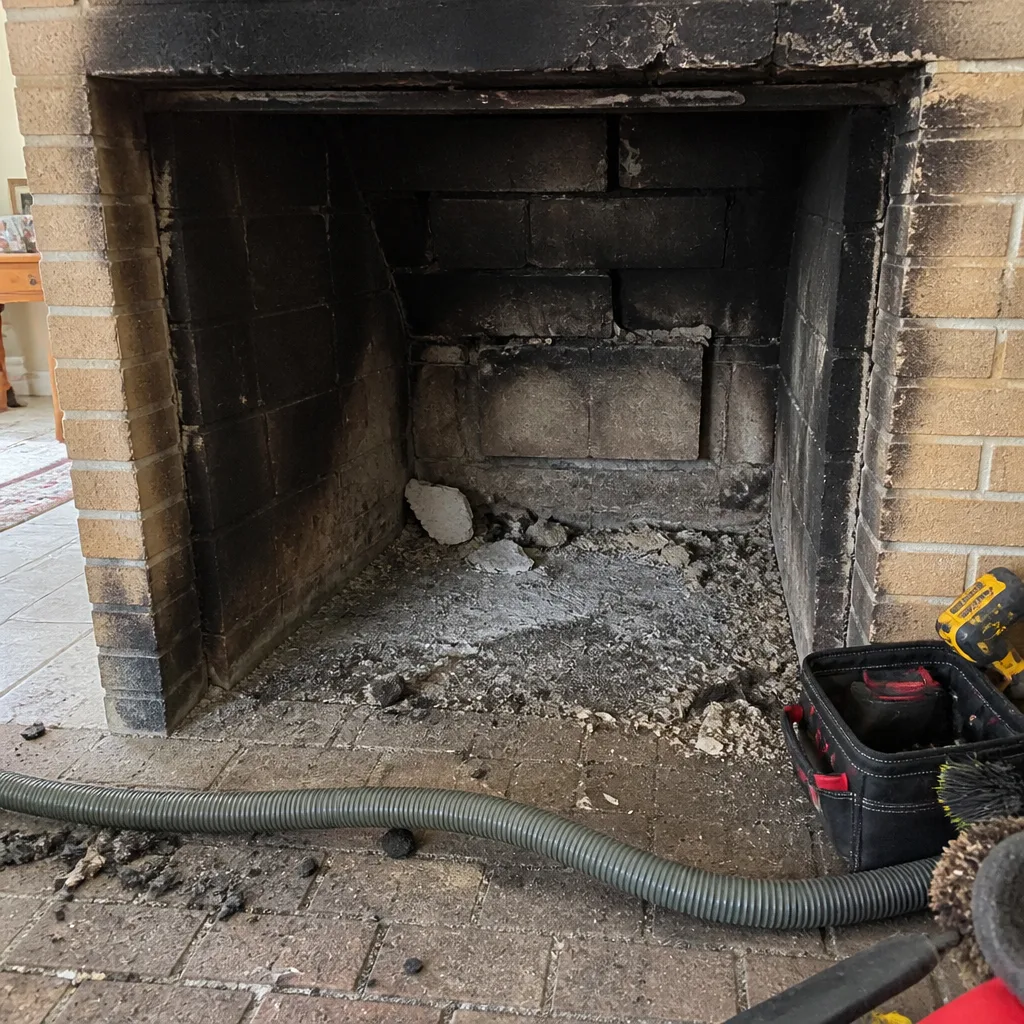
Palm Bay’s damp, warm air is hard on masonry. Mortar joints, firebox brick and the crown all absorb moisture from the air and hold it. Over time that moisture expands and shrinks the mortar, opens hairline cracks, and spalls the firebox surface. The result is a chimney that won’t draft well even after a cleaning – and a homeowner who’s been told, wrongly, that creosote is the problem.
Here’s how the failure plays out, and why it gets mistaken for a soot issue:
- Moisture reaches the firebox. Damp mortar softens and cracks. The drawn, flaky surface of a failing firebox looks like heavy soot buildup to someone untrained.
- Cracks widen. Air and fire can reach the brick through them, and the firebox loses its tight seal. The fire no longer holds a steady burn.
- Draft suffers. A firebox that can’t hold heat loses the warm-air column that pulls smoke upward. Smoke lingers and rolls into the room.
- It worsens between seasons. A chimney left idle through the wet months comes back with drier, more crumbly mortar by the next burn season.
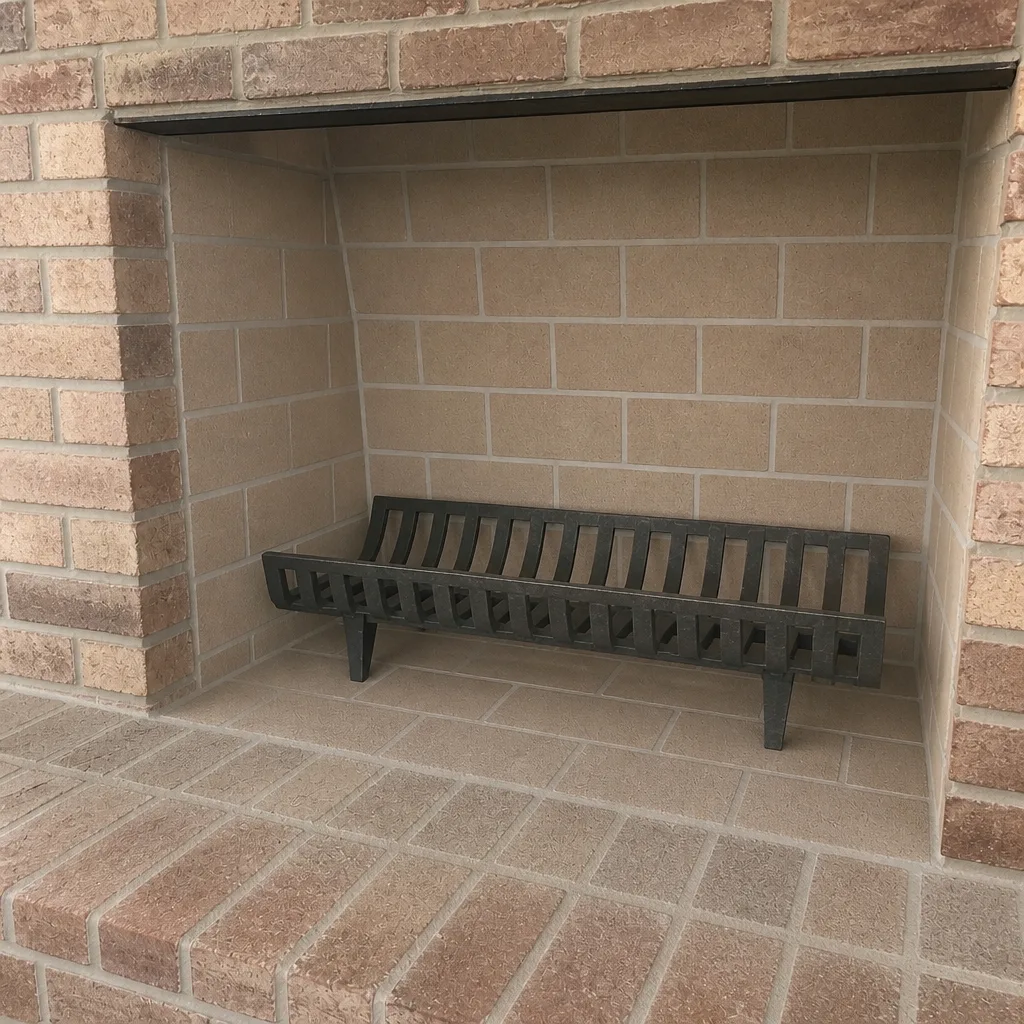
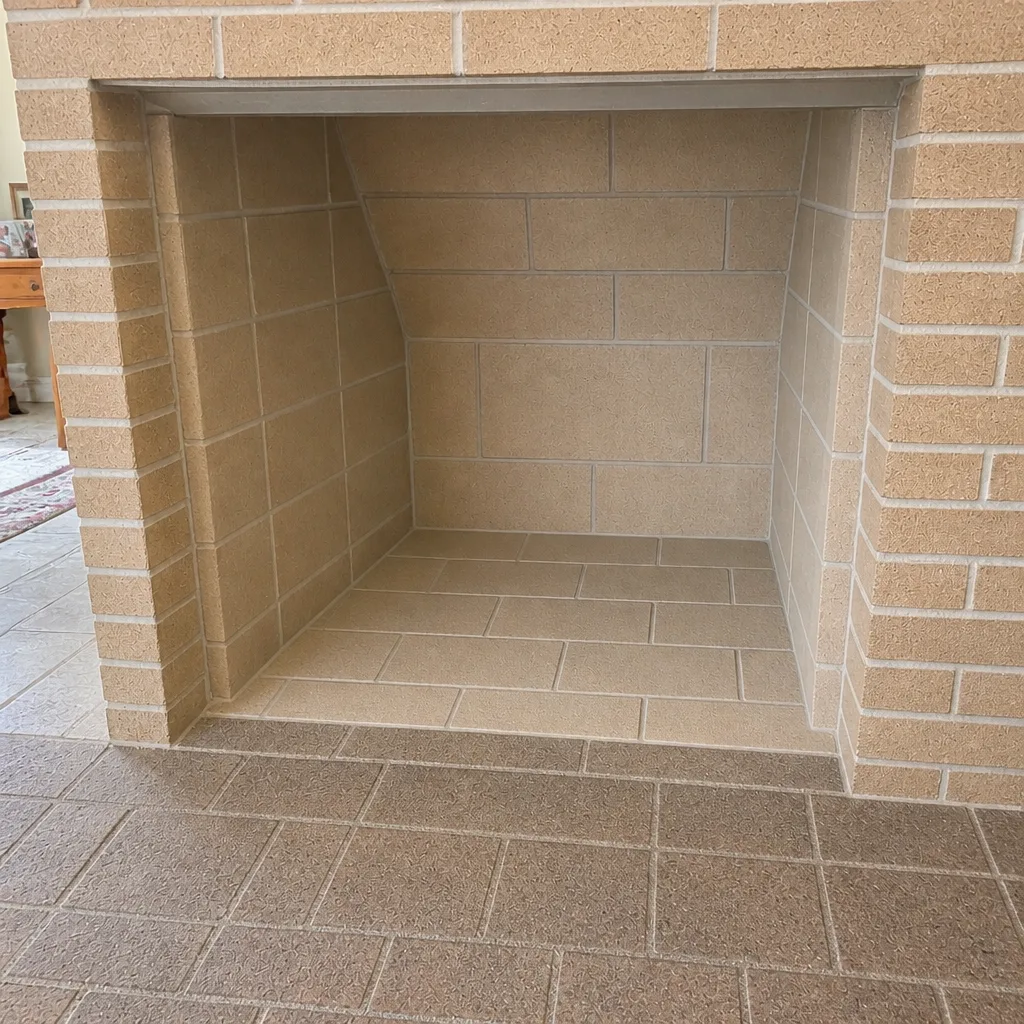
The mistake is treating the symptom as a cleaning problem. Sweeping a flue doesn’t repair a cracked firebox or reset a crumbling crown. The real fix is resurfacing the damaged masonry – and this is where HeatShield comes in. It’s a professional ceramic restoration system applied directly to the firebox and flue tile to close those cracks and restore the seal. It’s the kind of work a general handyman almost never stocks or knows how to apply, and it’s the difference between a repair that lasts and a coat of paint over a failing surface.
The pattern to remember: if draft problems keep coming back after a sweep, or you see crumbling mortar or flaking firebox brick, the chimney is telling you about water, not soot.
Wildlife in the Flue: Chimney Swifts, Raccoons and Florida’s Rules
Chimneys make attractive real estate. Chimney swifts, raccoons, squirrels and birds all find flues and caps useful, and the timing matters for Palm Bay homeowners. The honest angle is that not every animal in your chimney can be handled the same way – and some are legally protected.
Chimney swifts. These small birds are protected under federal law, and their nesting season runs through the warmer months. You cannot legally disturb an active nest, remove the birds or “sweep them out.” The correct approach is to wait until the young have fledged and the season is over before any cleaning or cap work. Push a sweep to clear an active nest and you can create a legal problem for yourself. A knowledgeable tech knows the season and schedules accordingly.
Raccoons. A mother raccoon will use a chimney to raise young. Removal is a job for a trained professional, and Florida rules around relocating wildlife apply – it isn’t a scoop-and-relocate situation. The presence of a raccoon family usually means a missing or damaged cap, which is the root cause to fix.
Birds and debris. Even after a bird is gone, the nesting material stays and blocks the flue. That blockage is what causes the weak draw and smoke rollout described above.
In our experience, the reliable fix for all of this is a proper chimney cap. A well-fitted cap keeps wildlife out, keeps rain out and keeps sparks in. We install them as part of the repair work, and we’ll tell you honestly when a cap is the whole answer – and when the flue also needs attention.
What You Can Safely Check Yourself (and What You Can’t)
There’s a real line between homeowner-friendly fixes and jobs that require training, tools and, frankly, the willingness to get on a roof safely. Respecting that line protects you from falls and bad repairs. Here’s how we’d draw it.
Safe for you to handle
- Look at the cap from the ground. Binoculars, from a safe spot – no roof climbing. A bent, missing or bird-blocked cap is visible from below.
- Open the throat damper before lighting a fire and close it afterward to keep warm humid air from rising up the flue between uses.
- Check for the obvious. If the fire is smoking, confirm the damper is open and no other exhaust fan is running in the house.
- Keep the area clear. Don’t stack wood against the chimney, and keep the hearth clear of combustibles.
Leave to a trained professional
- Roof-level work. Climbing to inspect the cap, crown or flashing is a fall risk. There’s no safe shortcut here.
- Anything past the firebox door. Reaching up into the flue is a contact hazard and won’t tell you what a camera will.
- Damper and firebox repairs. A warped plate or a cracked firebox needs parts matched to the system and proper fit.
- Any repair to the flue itself. Cracked tiles, crumbling mortar and lost seals need the right materials and the right application.
The reason we’re firm about the second list is simple. The most common cause of a chimney problem that gets worse is a well-meaning DIY fix that seals a surface without fixing what’s behind it. If you’re unsure which list a job belongs on, call and describe it. We’d rather answer a question than repair a mistake.
The Inspection Sequence: What a Thorough Sweep Actually Does
A thorough inspection has a rhythm to it. It moves from the outside in, then from the firebox up. Knowing the sequence lets you spot the difference between a real inspection and a quick glance up the flue. If your sweep skips a step, you have every right to ask why.
Here’s the order we work in on a Chimney Sweep Palm Bay visit:
- Talk to you first. What have you noticed, when does it happen, and what have you already tried? The symptom description drives the whole visit.
- Check the exterior. Roof-level look at the cap, crown, flashing and masonry for cracks, staining and wildlife. Camera or binoculars as needed.
- Look inside the firebox. Damper, firebox brick, mortar joints and any rust or deterioration. Photos of anything notable.
- Run a camera down the flue. This is the step a quick sweep skips. The camera shows creosote level, cracked or missing tiles, gaps and blockages that no surface look can see.
- Clean if needed. Proper drop cloths, appropriate brushes, no mess in the living space.
- Report with evidence. Show you the photos and camera footage, explain what’s fine, what needs watching and what needs repair – and say plainly when a repair can safely wait.
That last step is the one that earns trust. A camera means you see what the technician sees. Nothing gets recommended that you can’t verify, and repairs are priced per job by a written estimate, not quoted on the spot from a guess. If you’ve not had an inspection since buying your Palm Bay home, or it’s been more than a year, this sequence is what a proper visit looks like. It’s also why we offer chimney repair from the same team that inspected: one company, one set of findings, no handoff.
The Common Repairs, and What Each One Involves
Once the diagnosis is clear, most chimney problems land on a short list of repairs. What matters to you is knowing what the work involves and why the material choice counts. Professional-grade components are what hold up over the years; anonymous generic parts are what fail early and cost you twice.
Caps and top-of-chimney protection
A proper cap keeps rain, birds and wildlife out and sparks in. We fit caps that suit the flue – this is where familiarity with Famco and Gelco products matters, because the right fit and material last. A cap is often the single most useful fix for the wildlife and weak-draw problems above.
Damper repair and replacement
A warped or sticking damper plate is the culprit behind a lot of smoke rollout. It can usually be repaired or replaced with a correctly sized component. When it’s done right, your fire draws consistently and warm air stops leaking up the flue between burns.
Firebox and flue tile restoration
Cracked firebox brick and crumbling mortar – the moisture problem described earlier – need resurfacing, not patching. HeatShield is the specialist system we use: a ceramic material applied to the firebox and flue tile to restore the surface and seal the cracks. It’s the repair that keeps coming back if it’s skipped or done with the wrong material.
Full liner work
When flue tiles are badly cracked or missing, the safe fix is a flexible liner system. DuraFlex liners are the professional-grade option: a stainless system that gives the flue a continuous, sealed interior. That’s a bigger job than a sweep and worth doing once, properly, with components you can trust.
Crown and masonry repair
A cracked crown lets water straight into the chimney. Repointing crumbling mortar and resealing the crown protects everything below it. Because Palm Bay’s humidity keeps pushing on masonry, this is the repair that most often needs repeating if it’s done as a thin cosmetic patch.
The brands we work with – DuraFlex, HeatShield, Gelco, Olympia Chimney, Famco and Copperfield – are the professional-grade products that certified contractors use across the country. We tell you which one goes into your repair and why.
When the Problem Shows Up After the Sweep
Sometimes a chimney is cleaned and the smoke still rolls in, or the odor lingers. That’s not a failure of the sweep – it’s a sign the real problem was never creosote. Humidity-driven mortar damage, a blocked cap or a failing damper won’t be fixed by a brush down the flue. What matters is that the sweep documented enough to know the difference and can move straight to the repair.
This is the case for using a team that sweeps, inspects and repairs. If your sweep only sweeps, a lingering problem means a second company, a second visit, a second explanation and findings that may not match. With us, the inspection that found the issue is the same team that repairs it, using the same professional-grade materials – so the accountability stays in one place.
The other thing worth knowing: a draft problem that shows up only on certain days isn’t random. Cooler, damper air, a closed damper or a running exhaust fan can all affect draw. Note when it happens and tell the technician; that detail does real diagnostic work.
Common Mistakes to Avoid
- Assuming a dirty flue is the cause of smoke rollout. A blocked cap, a closed or failing damper and negative pressure cause it just as often. A brush won’t fix a warped plate.
- Treating white staining as a cleaning issue. Staining is water getting in at the cap, crown or flashing. Clean the surface and the leak continues underneath.
- Clearing a chimney swift nest in season. Swifts are protected, and disturbing an active nest can create a legal problem. Wait until the season is over.
- Reaching up the flue or getting on the roof yourself. The fall and contact risks aren’t worth it, and you still won’t see what a camera sees.
- Skipping the camera because the flue “looks clean.” Cracked tiles and partial blockages don’t show up in a surface look. The camera is the point.
- Sealing a firebox with a general-purpose patch. Generic materials don’t hold up in Palm Bay’s humidity. HeatShield is the specialist fix, and it’s the one that lasts.
- Going more than a year without an inspection. Humidity moves slowly and then all at once. A yearly look catches moisture damage before it’s a rebuild.
See the difference
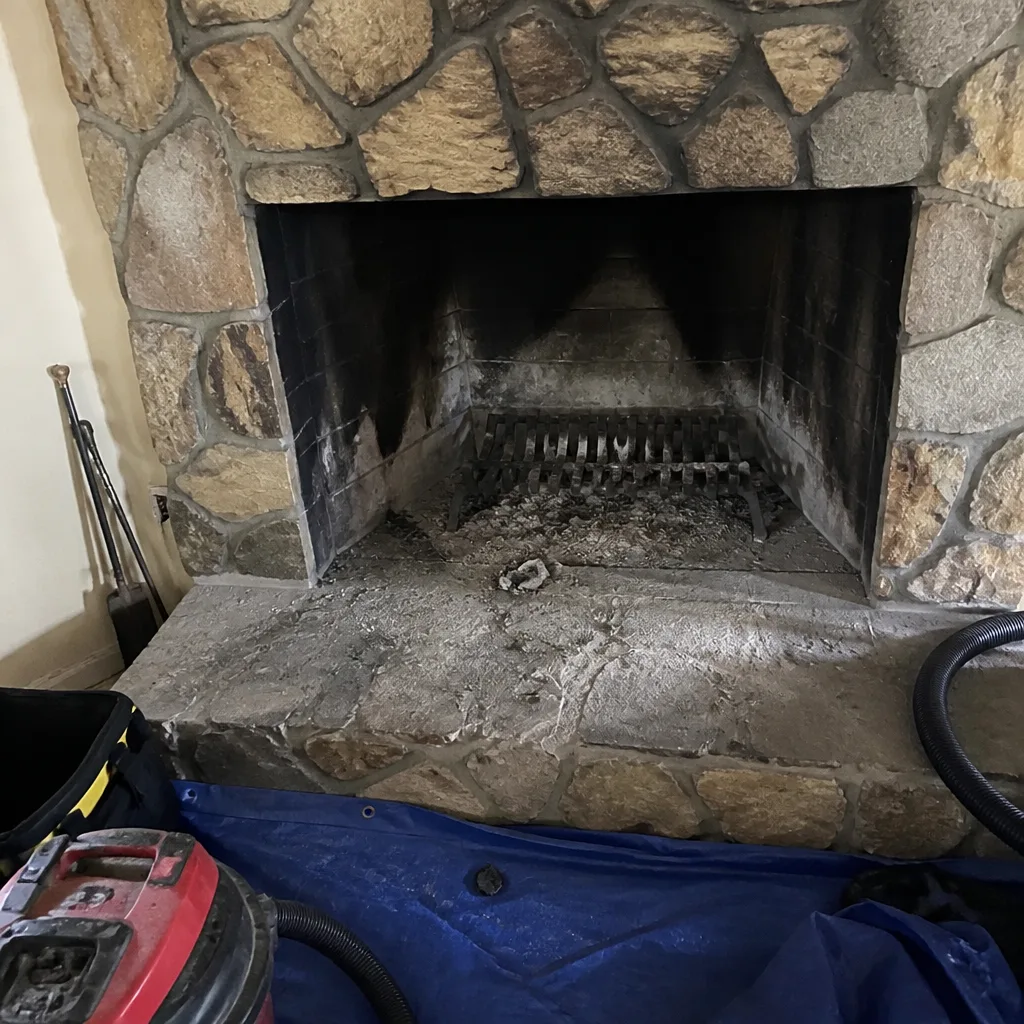 Before
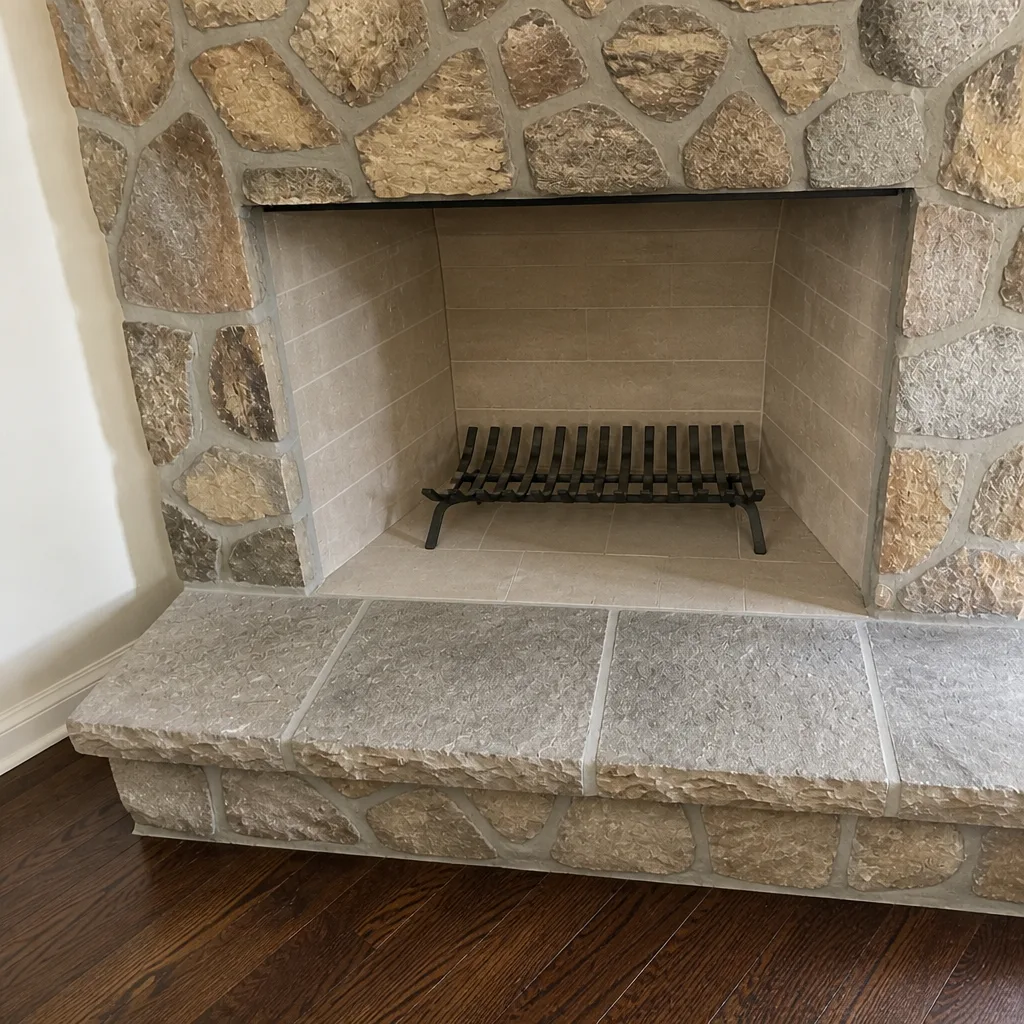 After
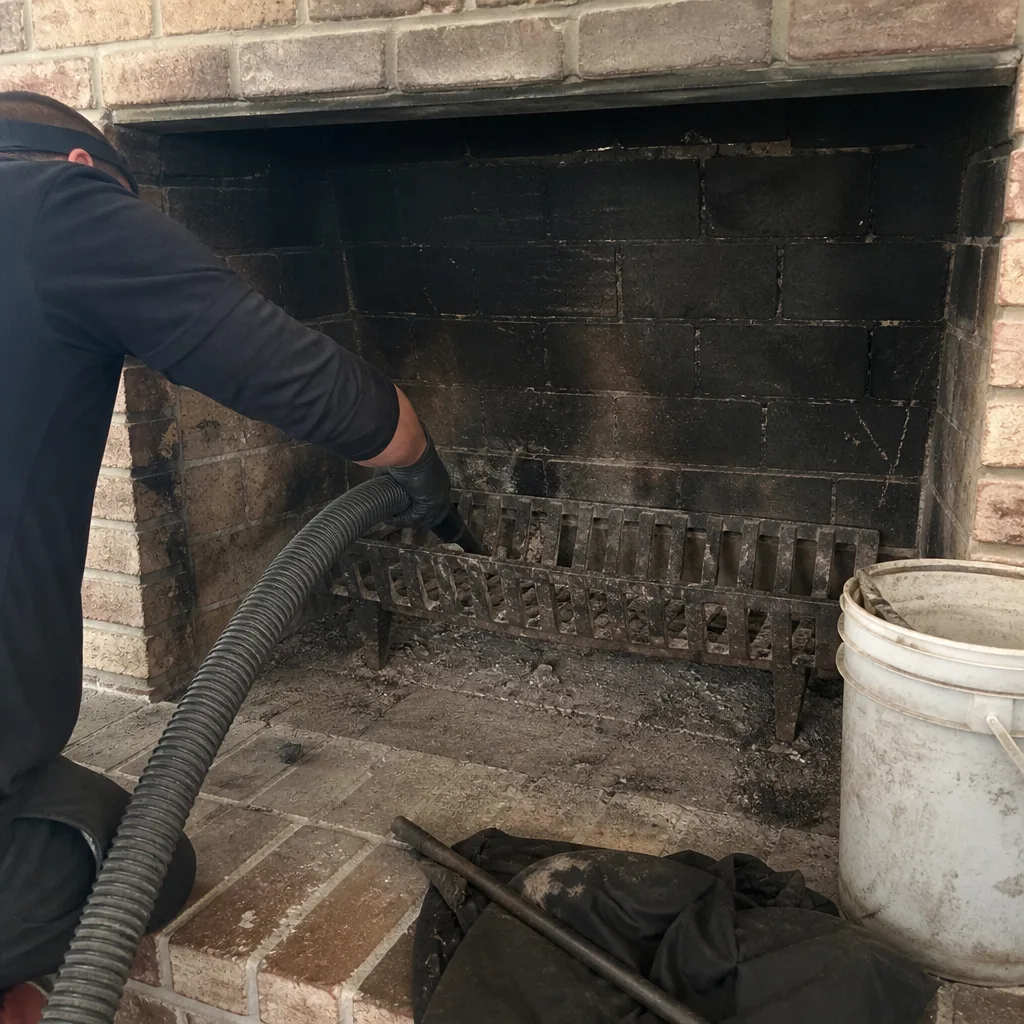 Before
 After
 Before
 After
When to Call a Professional
Call a trained technician if smoke rolls into the room when you light a fire, if you notice a persistent smoky odor between burns, or if you see white or brown staining on the masonry or near the chimney. Call if you have wildlife in the flue – swifts and raccoons both need professional handling, and swifts are protected. Call if you’ve not had an inspection in more than a year, or if you recently bought a home in Palm Bay and have no record of one. Call if the draft has gotten worse after a previous cleaning. None of these need a panic call – but every one of them needs an expert look before you burn again.
Chimney Sweep Palm Bay offers free estimates in Palm Bay – call (855) 632-3563. We answer 24/7. Fast dispatch from 7am to 7pm, Sunday through Friday.
Frequently Asked Questions
Smoke rollout in Palm Bay is most often caused by a blocked or damaged cap, a warped throat damper or negative pressure in the house – not by a dirty flue. Cold, dense air in the flue before you light a fire makes it worse, and so does a running exhaust fan. A camera inspection confirms which cause it is before anything gets repaired. Call (855) 632-3563 for an exact quote – estimates are free.
A smoky or creosote odor between fires usually means soot and moisture are held in the masonry, or that humid air is reaching sooty surfaces through a leak. Odor that shows up mostly on damp days points to moisture, not creosote. A sweep can confirm and recommend the right fix. Call (855) 632-3563 for an exact quote – estimates are free.
No. Chimney swifts are protected under federal law, and Florida wildlife rules apply to raccoons – disturbing an active nest or trying to relocate an animal yourself can create a legal problem and put you at risk. Wait for the protected season to end and have a professional handle removal and capping. Call (855) 632-3563 for an exact quote – estimates are free.
Humidity-driven mortar damage is a common cause locally. Moist air cracks mortar and spalls the firebox, which breaks the seal and weakens draft – so the chimney won’t draw well even after a cleaning. Resurfacing with HeatShield restores the firebox and flue seal. A camera inspection confirms whether that’s what’s happening. Call (855) 632-3563 for an exact quote – estimates are free.
Most homes need a sweep and inspection about once a year, or sooner if you burn heavily or notice any symptoms from this guide. In a damp climate like ours, the yearly look is also how moisture damage gets caught early. If it’s been more than a year, book one. Call (855) 632-3563 for an exact quote – estimates are free.
A sweep removes soot and creosote from the flue and firebox; an inspection checks the whole system for blockages, cracked tiles, moisture damage and failed seals, usually with a camera. A good visit includes both, plus photos you can see. That’s how you know nothing is recommended without evidence. Call (855) 632-3563 for an exact quote – estimates are free.
Often, yes. Because we sweep, inspect and repair as one team, a finding can move to a diagnosis and a written estimate without scheduling a second company. Some repairs need parts or a follow-up, and we’ll say so plainly. The price is always set per job by the written estimate. Call (855) 632-3563 for an exact quote – estimates are free.
Key Takeaways
- Diagnose by symptom: smoke rollout usually means a cap, damper or pressure problem, not a dirty flue.
- Palm Bay humidity wears on masonry and fireboxes, and the result mimics creosote buildup.
- Chimney swifts are protected – wildlife removal waits for the season to end.
- You can safely check the cap from the ground and work the throat damper. Roof and flue work belongs to a technician.
- A thorough inspection follows the same sequence every time and ends with camera evidence you can see.
- Professional-grade brands – DuraFlex, HeatShield, Gelco, Olympia Chimney, Famco – are what hold up in a repair.
The Bottom Line
Chimney problems in Palm Bay usually trace back to airflow, water or structure – and the symptom you notice points to which one. Smoke rollout is more often a blocked cap or failing damper than a dirty flue. Odor and staining point to moisture. Draft problems that persist after a cleaning point to humidity-damaged masonry. The fix in every case starts with a real inspection that shows you what was found, not a guess. When you know the map, you approve repairs with confidence instead of crossing your fingers. Your fireplace should work safely every time you light it, and the right diagnosis is what gets you there.
Chimney Sweep Palm Bay provides chimney sweeping, chimney inspection and chimney repair. We work with professional-grade brands, document what we find with camera evidence, and hand you a written estimate before any work begins. Call (855) 632-3563 for a free estimate. We answer 24/7. Fast dispatch from 7am to 7pm, Sunday through Friday.
Written by the team at Chimney Sweep Palm Bay.