
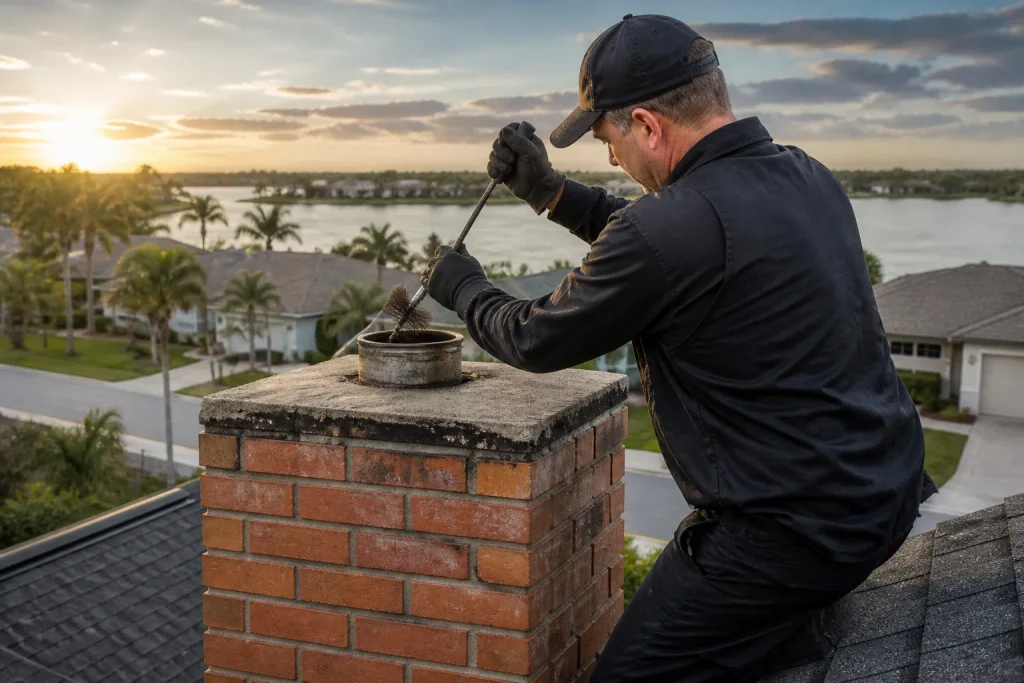
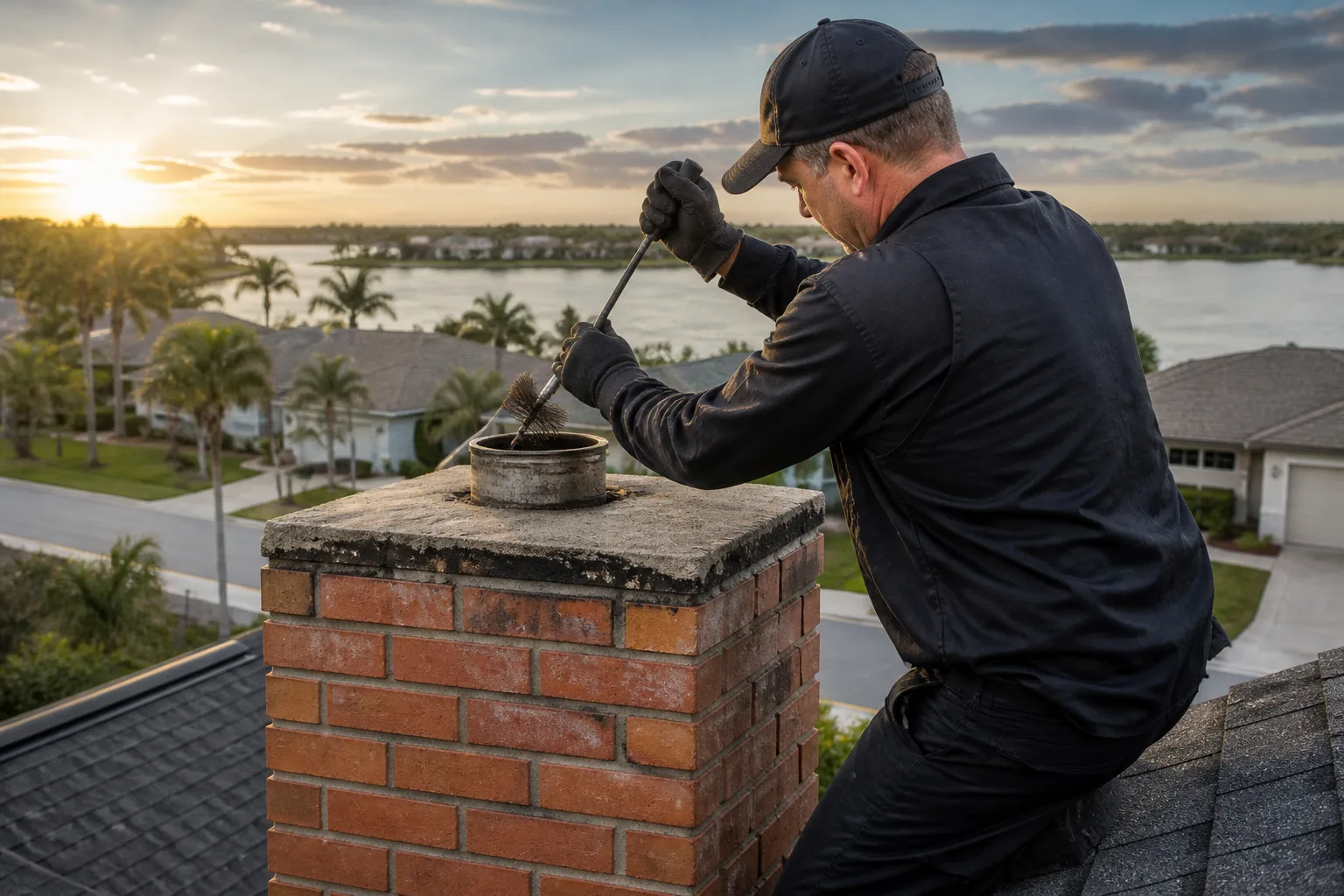
Emergency Chimney Sweep Near Me: What Palm Bay Homeowners Should Do First
Searching for an emergency chimney sweep while smoke is filling your living room is the wrong sequence. Stop the airflow first, then search. Here’s exactly what that means: close the damper, get fresh air moving through the room, and only then decide whether you’re calling 911 or calling a sweep. Most chimney problems that feel like an emergency at 8pm turn out to be manageable once airflow is under control. And if you’d rather hand the whole thing to us instead of working through it yourself, call (855) 632-3563. We answer 24/7.
What Should You Do in the First Fifteen Minutes of a Chimney Emergency?
The first fifteen minutes belong to you, not to whoever you eventually call. Three actions reduce risk faster than any phone call: stop the airflow, ventilate the room, and decide who to call. In that order. Smoke needs a path, and a chimney that’s pulling incorrectly or blocked will push smoke back into the house until you cut that path off.
- Close the damper. If smoke is backing into the room, shut the damper to break the draft. That stops the chimney from pulling more smoke inward from a flue that isn’t venting properly.
- Open a window or exterior door in the same room. A cross-draft pulls smoke out and gives you cleaner air to breathe while you work out what’s happening.
- Get everyone out and call 911 if you see flames at the top of the chimney, smell a strong chemical or burning-plastic odor, or your carbon monoxide alarm is sounding. Those are fire-department calls, not chimney-sweep calls.
If none of those three conditions apply – no flames, no CO alarm, no burning smell you can’t explain – you have an urgent-but-not-emergency situation, and a sweep can handle it during normal dispatch hours. That distinction matters, and most Palm Bay homeowners only learn it once. Call (855) 632-3563. We answer 24/7. Fast dispatch from 7am to 7pm, Sunday through Friday.
What Actually Counts as a Chimney Emergency?
A genuine chimney emergency is one of three things: an active chimney fire, an active structural crack in the firebox or flue, or a carbon monoxide alarm triggered with the fireplace or appliance in use. Everything else – heavy smoke smell, a nest or animal entry, a damper that won’t open, creosote odor on a warm day – is urgent, but not the same category. Getting that sorting right determines who you call and how fast you need them.
Here’s how the split works in practice:
- Call 911 first: roaring sound from the flue, visible flames or sparks at the chimney top, glowing sections of stovepipe, active smoke pushing into living space with a hot smell, CO alarm sounding, or a crack you can see into with a hot fire burning.
- Call a chimney sweep: a strong smoke smell you can’t place, a chimney that smokes every time you light a fire, an animal in the flue, a damper stuck open or closed, or a chimney cap blown off in a storm.
- Call for a booked inspection: no smoke or fire issue, but you haven’t had the chimney looked at in over a year, or you bought a home in Palm Bay recently and don’t know the chimney’s history.
The reason the distinction matters is equipment and scheduling. A fire department brings water and ladders. A sweep brings rods, brushes, a camera, and the parts to actually correct what they find. Calling the wrong one first costs you time. Our technicians have up to 13 years of experience reading exactly these signals over the phone, and we’ll tell you straight whether you need a sweep or a fire crew.
What Does a Chimney Fire Feel Like From Inside the House?
Most people who’ve never had a chimney fire misidentify it, because Hollywood gets it wrong. It doesn’t usually look like a bonfire on your roof. From inside, a chimney fire often sounds like a low roar or a rumble coming down the flue – similar to a distant freight train or a strong wind pulling hard through a draft. You may hear a crackling or popping that’s louder than your normal fire. You may see dense smoke pushing back into the room, or notice the stovepipe glowing dull red near the ceiling.
From outside, the signs are often more obvious: thick dark smoke, sparks, or flames visible at the top of the chimney, or a sound like a roaring engine coming from the flue. If you’re reading this and recognizing that description, get out of the house and call 911. A chimney fire can crack flue tile and spread into framing without ever showing itself from the living room. That’s the reason chimney fire awareness is a safety issue, not a cosmetic one. If you’d rather just confirm your chimney’s condition before the season starts, book a chimney sweep – it’s the simplest way to find out what’s actually inside the flue before it becomes a problem.
What Should You Tell the Chimney Sweep When You Call?
Give us the right details on the phone and we arrive with the right equipment rather than scheduling a second trip. Five pieces of information make the difference between an efficient first visit and a return appointment:
- Fuel type. Wood, gas, pellet, oil, or an open hearth – each requires different cleaning tools and different safety checks.
- Last inspection date. If you don’t know, say so. “Not since I bought the house” is a useful answer.
- What you observed. Smoke backing into the room, a smell, a sound, an animal, a visible crack, a fallen cap. Describe it in plain words.
- Whether the fireplace is currently in use. If there’s a fire burning, don’t light a new one, and let us know.
- Your address and how to get to the chimney. Roof access versus interior access changes how we plan the visit, especially in Palm Bay’s older single-story homes with low-slope roofs.
We also ask whether the chimney has been lined, and if so, whether you know what kind of liner it has. That signals whether the visit is a straightforward sweep or might extend into chimney repair work. If a liner needs replacement, we work with DuraFlex flexible liner systems – the same professional-grade brands the certified trade uses. If the firebox or flue tile needs resurfacing, we use HeatShield, a specialist ceramic restoration system most general handymen don’t carry.
What Does an Emergency Visit Cover, and What Comes After?
An emergency visit stalls the active problem and confirms the chimney is safe to leave overnight. It does not replace a full inspection. That’s the honest answer most companies skip, and it’s worth explaining clearly. What we can do during an urgent call-out is stop the smoking, clear a blockage, secure a cap, or tell you definitively whether you can safely light a fire again. What we can’t do in that window is a complete Level 2 inspection of the entire flue interior – that requires thorough camera work, a full sweep, and time to document what we find.
So the typical sequence looks like this:
- Emergency stabilization – address the active symptom and make the chimney safe.
- Full sweep and Level 2 inspection – booked separately, with camera inspection and a photo report you keep.
- Repairs, if necessary – liner work with DuraFlex, firebox or flue tile restoration with HeatShield, or cap and damper corrections using Gelco components – handled by the same team that did the inspection.
That single-point accountability matters. You don’t get handed a diagnosis by one company and a repair estimate from another that’s never seen the inside of your flue. And in our experience, the majority of follow-up inspections find nothing that requires major work – which is exactly why we document findings with photos. Nothing gets recommended that you can’t verify yourself.
When to Call a Pro (and When It Can Wait)
Call a pro the same day if you smell smoke in the house with no fire lit, if your fire won’t draw properly, if a bird or animal has gotten into the flue, or if you’ve just bought a home in Palm Bay and have no chimney history to go on. Call 911 first if you’ve seen flames at the top of the chimney, heard a roaring sound from the flue, or your CO alarm is sounding. And if you simply haven’t had the chimney looked at in a year or more, don’t wait for a symptom – book a sweep and inspection before the next heating season.
We do the full spectrum here: sweep, inspect, and repair all in one team, so when an inspection turns up something that needs fixing, we can tell you the same visit rather than sending you back to Google to find someone else. Call (855) 632-3563. We answer 24/7. A call outside dispatch hours is booked into the next opening, Sunday through Friday, 7am to 7pm.
Related services in Palm Bay: our Chimney Sweep Palm Bay page covers the full sweep-and-inspection process. If you’re looking at a specific repair, our Palm Bay service area page has the details on what we handle and where.
The Bottom Line
The first fifteen minutes of a chimney emergency are about airflow and sorting, not speed-dialing. Close the damper, ventilate the room, and figure out whether you’re in a 911 situation (active fire, CO alarm, structural crack) or an urgent chimney-sweep situation (smoke, smell, blocked flue, animal). What you tell the sweep on the phone – fuel type, last inspection, what you saw – sets up a productive first visit instead of a repeat appointment. And whatever the emergency visit covers, a full Level 2 inspection follows, with camera evidence and a written report you can hold in your hand.
If you’re in Palm Bay and need help, Chimney Sweep Palm Bay offers free estimates – call (855) 632-3563. We’ll bring the right tooling for what you describe, tell you honestly whether the work can wait, and document everything we find.
Frequently Asked Questions
A chimney fire often sounds like a low roar or rumble from the flue, similar to a distant freight train, and may come with loud crackling, dense smoke backing into the room, or a glowing stovepipe. If you see flames or sparks at the chimney top, get everyone out and call 911. Once the fire department has cleared the scene, call (855) 632-3563 for a follow-up inspection.
Not until a technician has checked the flue and confirmed it’s safe. Even if the fire is out and everything looks fine, an event can crack flue tile, loosen a liner, or leave creosote ready to reignite. A sweep visit confirms whether you can safely use the fireplace again, and a full Level 2 inspection follows to verify the flue is sound. Call (855) 632-3563 to schedule.
Wait for a normal appointment unless you have an active fire, a carbon monoxide alarm, a visible structural crack, or heavy smoke entering the room with a fire burning. A strong smoke smell, a stuck damper, an animal in the flue, or a cap that’s come loose are urgent but not emergencies – a booked visit handles them fine. Call (855) 632-3563 and we’ll help you sort which category you’re in.
Pricing is set per job by the written estimate, so we won’t quote a number over the phone based on a guess. What we will do is inspect, document findings with photos, and give you a clear written estimate before any repair work starts. Sweep and inspection work is priced the same regardless of when it’s booked. Call (855) 632-3563 – estimates are free.
Written by the team at Chimney Sweep Palm Bay.
Need Chimney Cleaning Help?
Call Chimney Sweep Palm Bay - licensed & insured, with free written estimates in Palm Bay.
(855) 632-3563